
Zucchini Spacing in Raised Beds for Bigger Plants and Cleaner Harvests
Zucchini spacing in raised beds is usually one plant every 24 to 36 inches, with the roomiest layouts giving each bush plant about 9 to 16 square feet once leaves expand. The key insight is that zucchini is not a one-square-foot crop: in a 4x8 bed, two to four plants usually outperform six crowded plants because airflow, bee access, and harvest visibility stay intact.
Zucchini spacing in raised beds controls the whole zucchini plant spacing plan because one compact transplant can become a three- to four-foot canopy before the first heavy harvest week. The right zucchini raised bed layout protects airflow, keeps blossoms visible to pollinators, and gives you room to pick fruit before it turns oversized.
This guide focuses on spacing decisions that matter in real beds: how many zucchini plants fit in a 4x8 raised bed, when two-foot spacing is realistic, where to place a staked plant, and when a sprawling summer squash should simply get a corner. If you are already using our square foot gardening spacing chart, treat zucchini as one of the crops that needs a deliberate exception rather than a dense grid square.
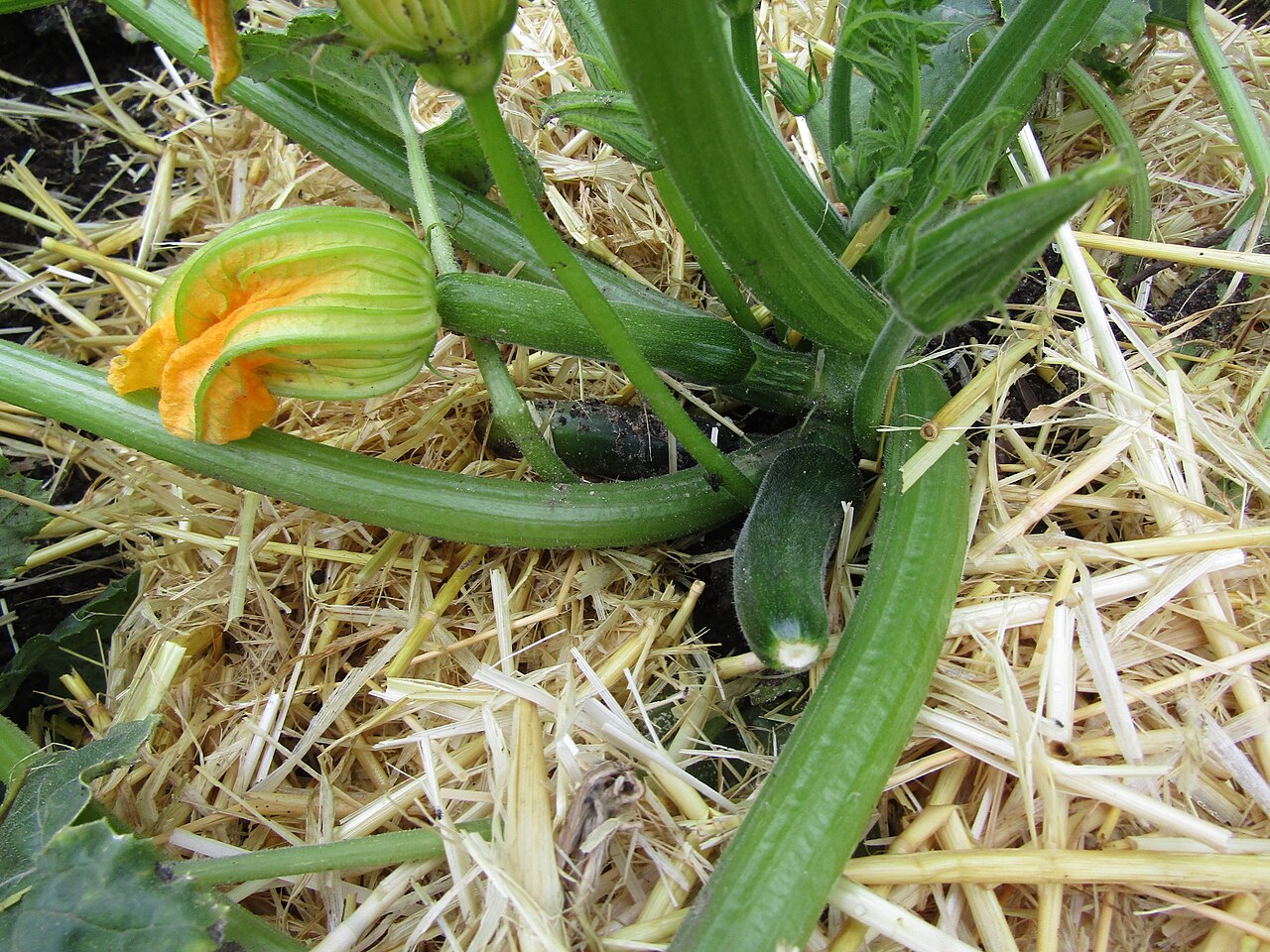
What Is the Best Zucchini Spacing in Raised Beds?
The best default spacing for zucchini in raised beds is 24 to 36 inches between plants. Use 24 inches only for compact bush varieties, edge plantings, or plants you intend to stake and prune lightly. Use 36 inches for full-size bush zucchini, humid climates, or beds where the plant must share water, light, and harvest access with peppers, cucumbers, flowers, or herbs.
Official extension sources explain why the range is broad. University of Illinois Extension lists summer squash spacing at 24 to 36 inches for single-plant production. Colorado State University gives summer squash 36 to 48 inches in block-style beds, while University of Minnesota notes that some summer squash types form long vines and need room to spread. Those recommendations sound wide in an empty bed, but zucchini fills them quickly once warm nights arrive.
Raised beds change the calculation because there are no walking rows inside the bed. You can use edge spillover, corner placement, and vertical support to make better use of space. What you should not do is reduce spacing until leaves overlap heavily at the crown. Crowded crowns trap humidity, hide squash bugs and eggs, and make it harder for bees to move between male and female flowers.
| Raised bed setup | Practical spacing | Best use | Main risk |
|---|---|---|---|
| Compact bush zucchini | 24 to 30 inches apart | Small beds, corner plants, short-season harvests | Leaves overlap if variety is more vigorous than expected |
| Full-size bush zucchini | 30 to 36 inches apart | Most 4x8 raised beds and mixed vegetable beds | Hidden fruit if plants face inward from the center |
| Staked zucchini | 24 to 30 inches apart with side access | Edge or corner placement where leaves can be tied up | Support does not reduce root demand or upper leaf spread |
| Trailing or vining summer squash | 36 to 48 inches apart, or one plant per corner | Beds with open paths or planned spillover | Vines overrun nearby crops if not directed early |
A reliable raised-bed rule is to size zucchini by its mature inspection zone. If you cannot see the main stem, reach the base, and pick fruit without leaning across another crop, the spacing is too tight for easy care.
How Many Zucchini Plants Fit in a 4x8 Raised Bed?
A 4x8 raised bed fits two to four zucchini plants in most home gardens. Two plants are the low-risk layout for a mixed bed because each zucchini can sit on an end or corner while the remaining soil supports peppers, basil, flowers, bush beans, or a late succession crop. Three plants can work if they are staggered along one long edge. Four plants is a dedicated zucchini or summer squash bed, not a casual add-on to a full vegetable plan.
The math is simple. A 4x8 bed has 32 square feet. A comfortable zucchini footprint is roughly 9 square feet for a compact plant and 16 square feet for a vigorous plant. That means two large plants can use the bed generously, while four plants require disciplined placement. Six plants may look possible on planting day, but by midsummer the center becomes a leaf tunnel with poor access and missed fruit.
| Plant count | Layout | Spacing logic | Best companion strategy |
|---|---|---|---|
| 2 plants | Opposite corners or one plant on each short end | About 4 feet of working room per plant | Use the middle for peppers, basil, flowers, or quick greens |
| 3 plants | Staggered along one long edge | About 30 to 36 inches between crowns with spillover | Keep the opposite edge low and easy to reach |
| 4 plants | One plant near each corner | Each plant gets an outward direction for leaves | Skip tall interior crops and reserve paths for harvest |
| 5 or more plants | Not recommended for most 4x8 beds | Canopy closes before fruiting peak | Use containers or another bed instead |
If the bed already holds tomatoes, start with our tomato spacing in raised beds guide before adding zucchini. Tomatoes and zucchini both demand airflow and reach, and neither crop improves when squeezed into leftover squares. For pepper-heavy beds, the spacing pressure is different: peppers stay upright, but their fruiting branches still need light, so use our pepper spacing in raised beds guide to protect the shorter crop from squash shade.
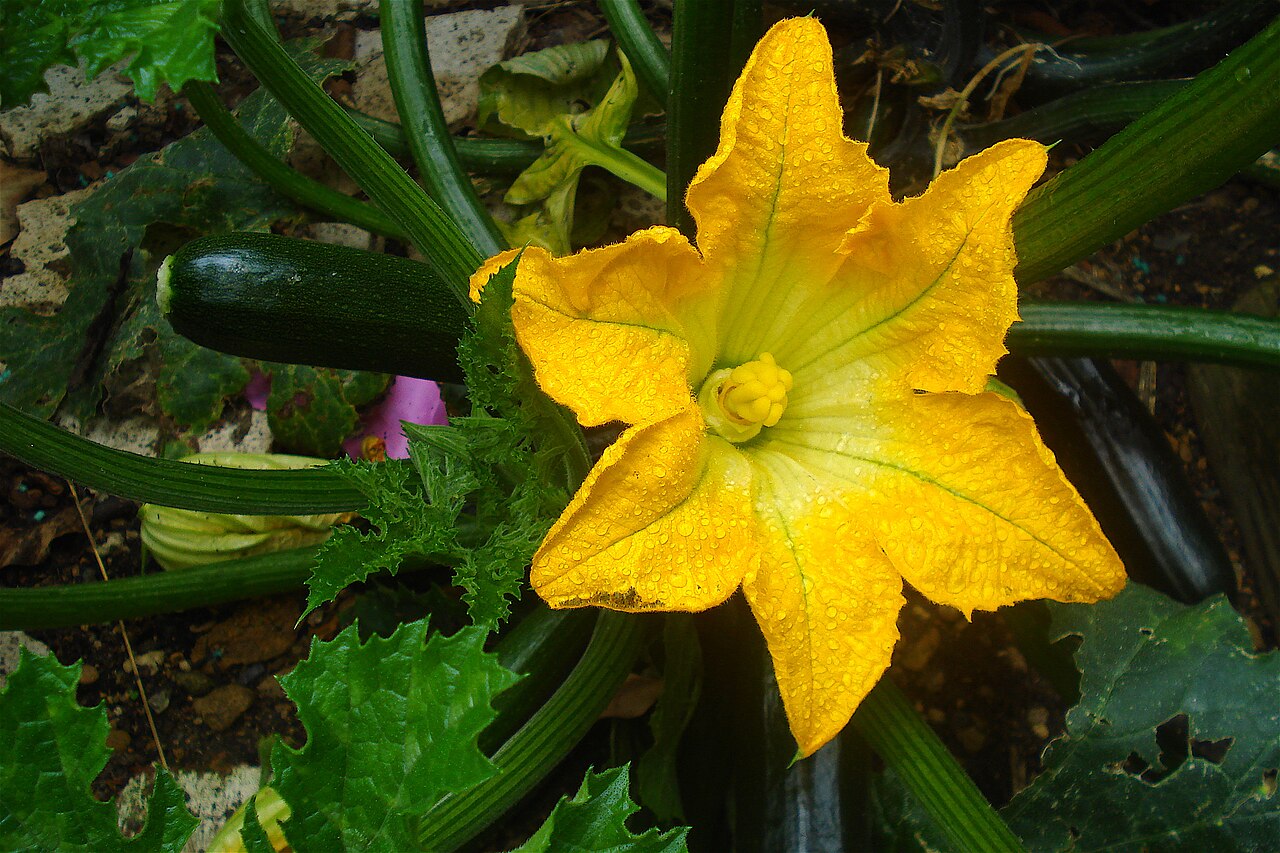
Can You Plant Zucchini Two Feet Apart in a Raised Bed?
You can plant zucchini two feet apart in a raised bed, but it should be treated as the tight end of the spacing range. It works best with compact bush varieties, rich soil, drip or soaker irrigation, and a layout where leaves can spill over a bed edge instead of into another crop. It is less forgiving in humid areas, in beds enclosed by fences, or in gardens where you only harvest once or twice a week.
Two-foot spacing fails when gardeners mistake early open soil for permanent open soil. A zucchini seedling may be only a few inches wide at planting, but the leaf stalks widen quickly and shade the base. Once the canopy closes, irrigation checks, squash bug scouting, and fruit harvest all become slower. The tight layout then costs more time than it saved in space.
When two-foot spacing is reasonable
Use 24-inch spacing when the plant is a compact cultivar, the bed edge gives the leaves an outward direction, and you can inspect the plant every two or three days. A staked plant on a corner can also work at this distance because the crown is easier to see. Keep any companion plants short and temporary. Radishes, lettuce, or scallions can fill early gaps, but they should be harvested before the zucchini canopy becomes the main crop.
When two-foot spacing is too tight
A full-size zucchini planted 24 inches from another vigorous squash, cucumber, tomato, or melon will usually crowd the bed. Avoid tight spacing when the bed is against a wall, when airflow is poor, or when powdery mildew is a yearly problem. University of Minnesota notes that squash plants rely on warm weather and pollinating insects, while Clemson Extension points to powdery mildew as a common disease problem on squash. Both concerns get harder to manage when leaves stack on top of each other.
Practical test: if you are debating 24 inches versus 36 inches, choose 36 inches when the plant is in the center of a bed and 24 to 30 inches only when the plant can grow toward an edge.
Should You Stake or Trellis Zucchini in Raised Beds?
Staking zucchini can improve a raised bed layout, but it does not make zucchini behave like trellised cucumbers. A cucumber vine can be trained into a narrow vertical lane. Zucchini has a thicker central stem, large leaf stalks, and fruit that forms near the crown. Support can lift the plant and reduce soil contact, but the upper canopy still needs light, space, and harvesting room.
The best support is a sturdy stake installed at planting or when the seedling is still small. Place it 3 to 4 inches from the crown, then tie the main stem loosely with soft garden tape as it elongates. Avoid forcing mature stems upright after they have sprawled because they can crack. A tomato cage can help young plants, but most standard cages are too light once zucchini leaves and fruit are heavy.
Vertical zucchini spacing
For vertical zucchini spacing, allow 24 to 30 inches between plants and keep at least one open side for harvest. Remove the oldest lower leaves only after the plant has enough upper canopy to keep feeding fruit. Do not strip the plant into a bare pole. The goal is cleaner airflow near the soil, not a dramatic pruning job that reduces photosynthesis during peak production.
Edge spillover spacing
Edge spillover is often simpler than staking. Plant zucchini 12 to 18 inches inside a bed corner, angle the crown so leaves grow outward, and keep the inside of the bed for lower crops. This layout works especially well when paths are mulched and wide enough for leaves to overhang without blocking foot traffic. It also lets you harvest from outside the bed instead of reaching across a dense canopy.
If you prefer true vertical summer production, cucumbers are a cleaner fit for a narrow trellis lane. Compare the space tradeoff with our cucumber spacing in raised beds guide before assigning a cattle panel to zucchini. Zucchini can be supported, but cucumber is the stronger crop for high-density vertical rows.
How Do You Keep Zucchini Spacing From Causing Powdery Mildew?
Spacing cannot eliminate powdery mildew, but it can make the bed easier to manage. Zucchini leaves are large, close to the soil, and often irrigated in hot weather. When plants are crowded, the inner canopy stays humid longer, leaf surfaces dry more slowly, and disease scouting becomes late instead of early. Wider spacing buys visibility and airflow.
Start with soil-level irrigation. A drip line or soaker hose keeps water near the root zone and reduces wet foliage. This matters in raised beds because they can dry faster than in-ground beds, tempting gardeners to overhead-water in the evening. Water deeply in the morning when possible, mulch after the soil warms, and keep emitters reachable so you can fix clogs without breaking stems.
Airflow checks for zucchini plant spacing
- You can see the main stem base without lifting several leaves.
- At least one side of each plant is open for harvest and scouting.
- Lower leaves are not pressed flat against wet mulch after watering.
- Female flowers and young fruit are visible before they become oversized.
- Companion plants do not block irrigation lines or the squash crown.
Harvest frequency also affects disease pressure indirectly. Clemson Extension recommends harvesting zucchini while fruit is still tender and notes that leaving large fruit on the plant can slow development of additional fruit. A bed where spacing lets you check fruit daily or every other day will stay more productive than a crowded bed where overgrown fruit hides behind leaf stems.

When Should You Direct Seed, Thin, and Succession Plant Zucchini?
Zucchini spacing starts before plants are large. Direct seeding is usually the cleanest approach because squash roots dislike disturbance. University of Minnesota recommends direct seeding after soil has warmed and warns that cold soil slows germination and growth. Colorado State also notes that vine crops perform best from direct seed, or from very young transplants if transplanting is necessary.
In practical raised-bed terms, wait until nights are stable, the bed is warm, and the irrigation line is already installed. Sow two seeds where one final plant should remain, not in every open gap. Thin to the strongest seedling once the plant is established and before stems begin competing. If you cannot bring yourself to thin, you are likely creating a spacing problem that will cost yield later.
Succession planting without overcrowding
Succession planting is useful because zucchini can produce heavily and then decline under pest, disease, or heat pressure. Instead of planting too many seedlings at once, plant one or two final plants first, then sow another plant three to four weeks later in another bed, corner, or large container. That gives you a backup crop without forcing six crowns into one 4x8 bed.
Use the same forecast logic from our seed starting calendar by zone, but remember that zucchini is faster than tomatoes and peppers. If you start indoors, keep the seedling young and move it before it becomes rootbound. If you harden off transplants, follow a short, careful outdoor transition rather than holding large squash starts in small cells.
Which Zucchini Raised Bed Layout Should You Choose?
Choose the layout by access first, then by plant count. For most home gardens, the best mixed 4x8 layout is two zucchini plants on opposite corners with the crowns pointed outward. This gives each plant room to expand, leaves the center workable, and reduces the chance that one squash canopy shades the entire bed. It also gives you space for pollinator flowers, peppers, basil, or quick greens without turning the bed into a squash thicket.
If you want three plants, place them along one long edge and let the leaves spill toward the path. Keep the opposite side of the bed lower and easier to reach. If you want four plants, commit the bed to summer squash and skip tall interior crops. Four plants can be productive, but only if every plant has an outward lane and you harvest frequently.
| Your situation | Best layout | Final plant count | Why it works |
|---|---|---|---|
| First-time raised bed gardener | Two opposite corners | 2 plants in 4x8 | High access, low crowding, easy harvest checks |
| Small-space gardener with paths around the bed | Long-edge spillover | 3 plants in 4x8 | Uses path airspace while preserving one working edge |
| Dedicated summer squash bed | One plant near each corner | 4 plants in 4x8 | Maximum plant count with outward growth lanes |
| Humid climate or recurring mildew | Wide corner spacing | 2 plants in 4x8 | Best airflow and easiest leaf removal |
| Mixed tomato, pepper, and squash bed | One zucchini on an end or separate container | 1 to 2 plants | Prevents squash leaves from dominating fruiting crops |
Companion planting can help, but it should not be used as an excuse to crowd the bed. Pair zucchini with short flowers that attract pollinators, or with early crops that finish before the canopy expands. Use our companion planting chart for vegetables as a planning filter: compatibility is useful only when spacing, water demand, and harvest access still work.
Soil depth and moisture decide whether the layout holds through summer. A shallow or quickly drying bed can make close spacing more stressful because all plants pull from a limited water reserve. If the bed is new, build the soil profile with our raised bed fill guide, then keep moisture steady with the same even-watering logic used in our wicking bed guide for water-sensitive crops.
FAQ: Zucchini Spacing in Raised Beds
How far apart should zucchini be in a raised bed?
Most raised beds should give zucchini 24 to 36 inches between plants, with 36 inches safer for full-size bush types and humid gardens. Compact varieties can sometimes work closer, but the plant still needs harvest access, airflow, and pollinator visibility. If the bed is mixed with tomatoes or cucumbers, use the wider end.
How many zucchini plants fit in a 4x8 raised bed?
A 4x8 raised bed usually fits two to four zucchini plants. Two plants are easiest in a mixed bed, while four only works when each plant is on a corner, edge, or disciplined support plan. Five or more plants usually creates harvest and airflow problems before peak production.
Can zucchini be planted 2 feet apart?
Zucchini can be planted 2 feet apart when the variety is compact, the bed has strong fertility, and you prune or stake enough to keep leaves from stacking. For full-size plants, 2 feet is usually the tight end of the range rather than the default. If mildew or hidden fruit are recurring problems, move closer to 30 or 36 inches.
Should you stake zucchini in a raised bed?
Staking zucchini can save edge space and make harvests cleaner, but it does not turn zucchini into a narrow cucumber-style vine. Use a sturdy stake early, tie the main stem loosely, and remove only lower leaves that block airflow or touch soil. Do not force an older sprawling stem upright.
How much space does one zucchini plant need?
One zucchini plant commonly needs a 3-by-3-foot footprint, and vigorous plants may use closer to a 4-by-4-foot zone by midsummer. The exact footprint depends on variety, support, pruning, climate humidity, and whether leaves can spill outside the bed. Plan around the mature canopy, not the seedling.
Related Guides
- How to Use a Square Foot Gardening Spacing Chart Without Crowding Beds
- Cucumber Spacing in Raised Beds for Trellises, Bush Types, and Cleaner Harvests
- Pepper Spacing in Raised Beds for Healthier Plants and Higher Yields
- How to Use a Companion Planting Chart for Vegetables That Actually Works
- How to Fill a Raised Garden Bed: Soil Mix Guide