
Pepper Spacing in Raised Beds for Healthier Plants and Higher Yields
Pepper spacing in raised beds usually works best at 15 to 18 inches for most home gardens because that range protects airflow, watering access, and fruit visibility without wasting bed space. Tighter 12-inch layouts can work for compact peppers or cool climates, but larger bells and poblanos generally need more room once branches load with fruit.
Pepper spacing in raised beds is not just a math problem about how many transplants you can squeeze into a four-foot box. It is a canopy-management decision that controls airflow, fruit set, irrigation access, and how quickly you can scout for aphids, sunscald, blossom drop, or branches starting to collapse under fruit weight. If you already use our raised bed soil guide or our square foot gardening spacing chart, this page picks up where those broader planning systems stop and answers the pepper-specific question directly.
The extension numbers are a useful baseline, but they are not all describing the same pepper shape. The University of Minnesota says to space pepper plants 18 inches apart in rows 30 to 36 inches apart and notes that closer spacing can raise yield when temperatures stay below 60 F. Clemson says standard peppers can be 12 inches apart in the row, while larger pimento types need 18 to 24 inches. Both are correct. The difference is plant size, climate, and how much room a gardener has for support and harvest access.
Raised beds change the calculation because row spacing and bed width collide. A 4x8 bed does not behave like a long open row where you can step from either side, shift a stake line later, or let a plant lean outward. In a bed, every branch you let sprawl into the center steals airflow and hand access from the plants beside it. That is why a spacing plan that looks conservative in May often turns out to be the most productive one by late July.
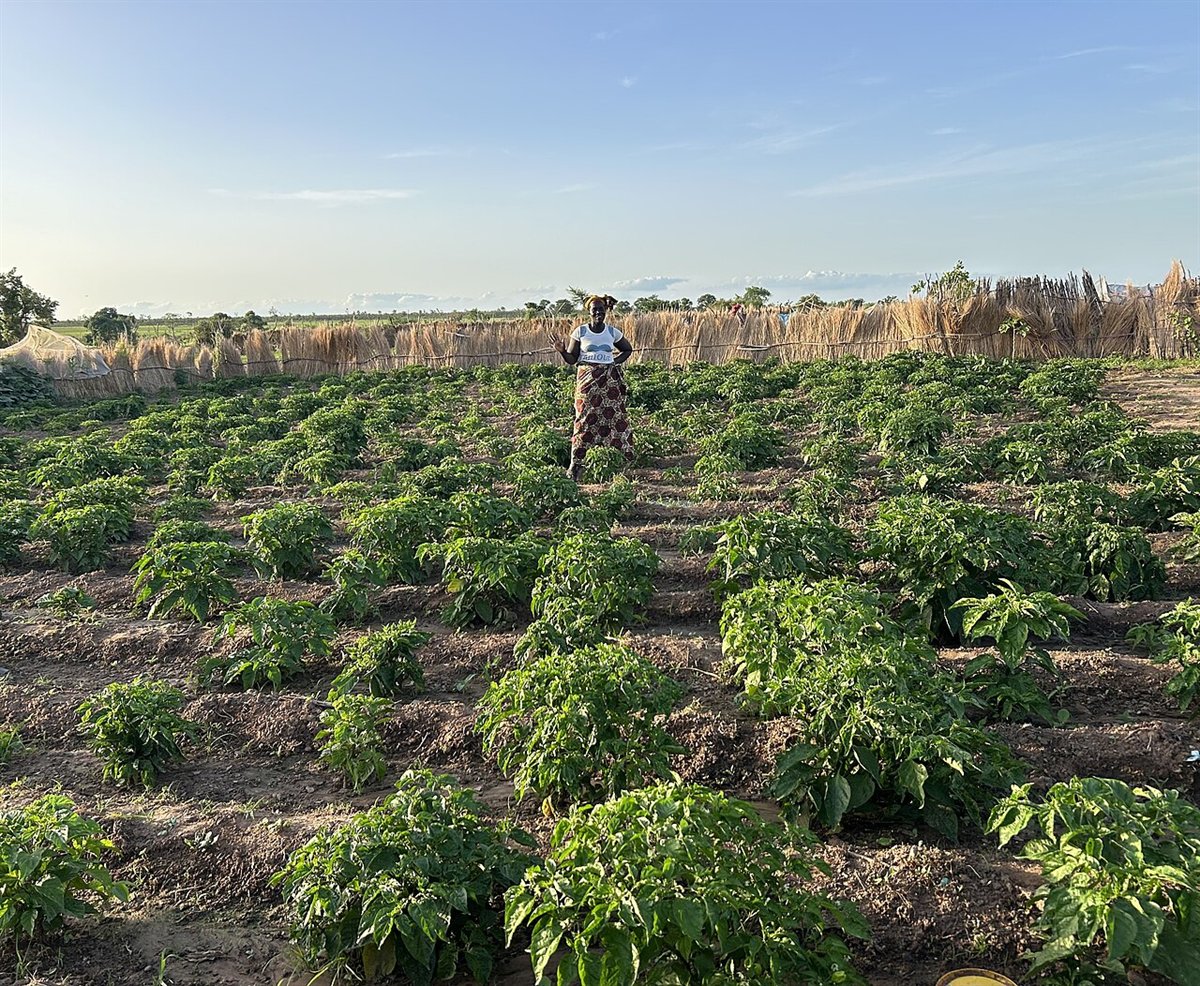
What Is the Right Pepper Spacing in Raised Beds?
The best answer for most home gardens is a range, not a single number. In a raised bed, compact hot peppers can often live at 12 to 15 inches apart, medium jalapeno and serrano plants usually fit best at 15 inches, and larger bell, poblano, and heavy-fruiting sweet peppers are safer at 15 to 18 inches. Once you move into especially broad varieties or very fertile beds that create lush branching, 18 inches becomes a more forgiving target.
The reason is simple: pepper plants bulk out late. A transplant that looks tiny in May can double or triple its canopy width after warm nights, regular moisture, and the first big flush of fruit. Bells and poblanos often widen more than new gardeners expect because the fruit weight pulls branches outward. Hot peppers are usually narrower, but they can still get tangled quickly when you plant them too tightly in a bed that also has basil, mulch, and drip tubing competing for the same edge zone.
| Pepper type | Recommended in-bed spacing | Best fit | Main watchout |
|---|---|---|---|
| Compact hot peppers | 12 to 15 inches | Small-fruited hot varieties in well-managed beds | Tight spacing can hide fruit and block quick harvest passes |
| Jalapeno and serrano types | 15 inches | Balanced density and good airflow in most raised beds | Plants can knit together fast in fertile beds |
| Bell peppers | 15 to 18 inches | Most home raised beds and standard harvest access | Heavy fruit pulls outer branches into neighbors |
| Poblano and larger sweet peppers | 18 inches | Gardeners who want easier pruning, picking, and staking | Looks roomy early, but uses space efficiently by midsummer |
| Pimento or very broad-framed peppers | 18 to 24 inches | Large-fruiting plants or windy sites with support | Too-tight spacing increases branch rub and disease pressure |
A useful rule is to space for the mature canopy, not the nursery pot. If you can picture two fruit-loaded plants touching across the center of the bed and still reach between them with one hand, the spacing is probably reasonable. If you already know you will add companions, mulch, or low support cages, give yourself another few inches rather than hoping pruning will rescue an overcrowded layout later.
Does Pepper Variety Change Spacing in Raised Beds?
Yes, and variety size matters more than heat level. Gardeners often assume hot peppers need very little room and bell peppers need only a little more, but the real difference is branch habit and fruit weight. A compact jalapeno can stay upright and relatively narrow, while a bell pepper loaded with large fruit often broadens at the shoulders and leans outward, especially after rain or a deep watering. Poblano and pimento types can act even larger because the fruit hangs heavier and pushes branches farther into the neighboring plant zone.
This is why extension spacing ranges look inconsistent until you sort by plant architecture. Clemson's standard 12-inch in-row pepper spacing makes sense for smaller or more upright plants grown in long rows with plenty of open air around them. Its wider pimento guidance also makes sense because those plants need more lateral room. In a raised bed, where each plant is competing with wall clearance and your reach distance, most bells and larger sweets benefit from landing in the middle or upper part of the range.
Bell peppers need more elbow room than many gardeners expect
Bell peppers are not huge plants compared with tomatoes, but they are bulky enough to punish crowded beds. Once fruit sets, the outer canopy gets denser and leaves overlap more heavily around the fruiting branches. If you are pairing bells with basil or low flowers from our companion planting chart for vegetables, keep those companions on the edge or in corners rather than at each main stem.
Hot peppers can be tighter, but not infinitely tighter
Hot peppers usually justify the lowest spacing numbers, especially when plants are topped lightly or harvested often enough to keep them balanced. The mistake is assuming a whole bed of compact peppers can be planted as if branch spread does not matter. Even compact types need light penetration to the lower canopy, and beds get harder to irrigate accurately once leaves form a continuous lid over the soil surface.
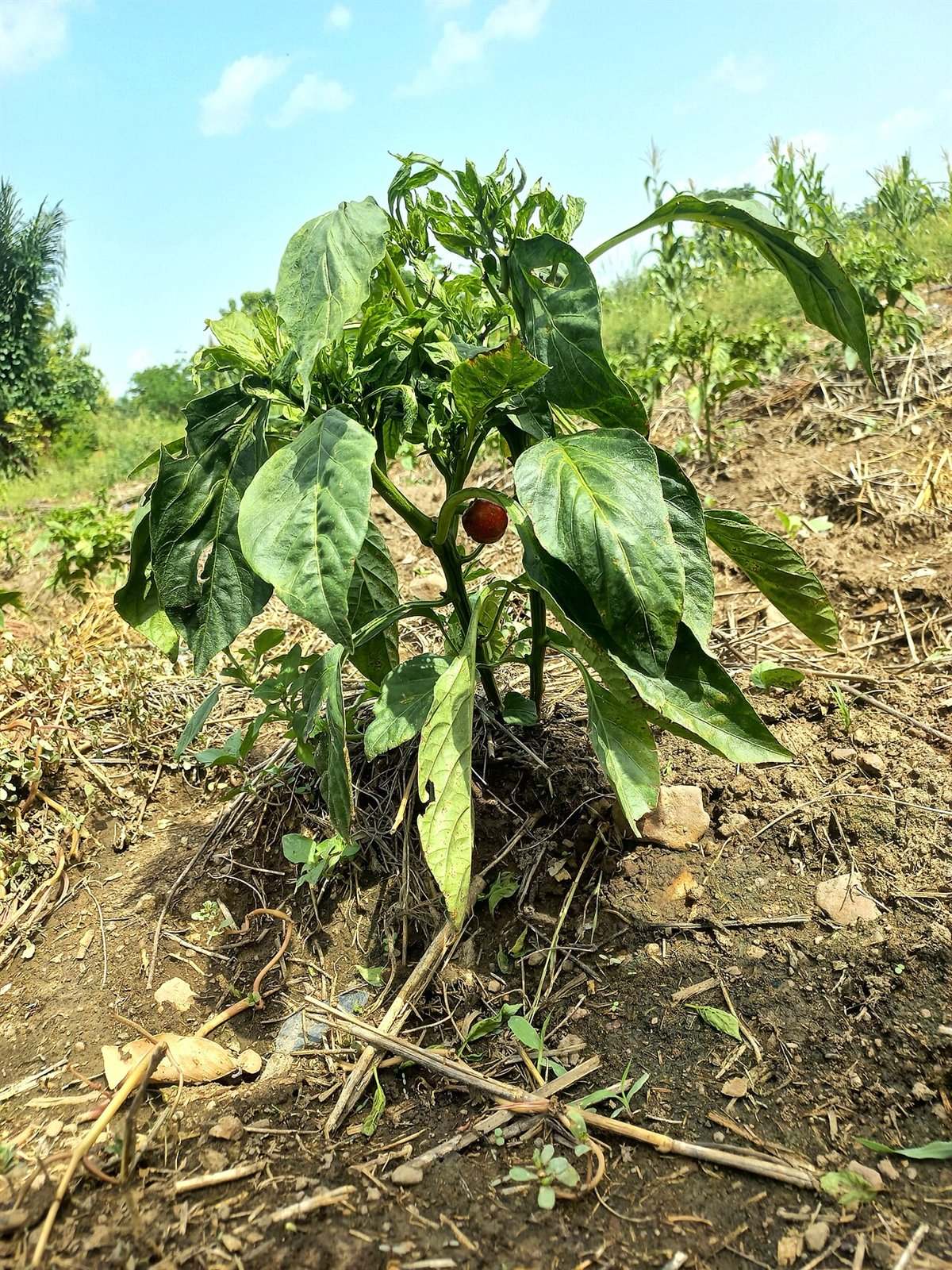
How Many Pepper Plants Fit in a 4x8 Raised Bed?
A 4x8 raised bed usually holds 8 to 12 pepper plants, but that number changes with variety size, whether you want one or two rows, and how much access you need for harvesting. The difference between a theoretical fit and a practical fit matters. Twelve compact peppers may fit on paper, yet feel frustrating once fruiting starts and you need room for mulch renewal, drip repairs, and weekly picking. Eight bells can feel spacious at planting time and exactly right by midseason.
For most households, a realistic target is 8 to 10 plants if bells or mixed sweet peppers dominate, and 10 to 12 only when the bed is built around narrower hot peppers or a disciplined staggered pattern. If you use heavy mulch from our mulch and evaporation control guide, stay closer to the lower end because mulch takes up functional edge space and makes the bed perform better when you do not overfill it.
| Layout style | Typical plant count | Best for | Why it works |
|---|---|---|---|
| Two roomy rows of bell peppers | 8 | Home gardeners who want easy harvest access | Preserves airflow and makes support simple |
| Two staggered rows of mixed peppers | 10 | Mixed sweet and medium hot plantings | Balances density with workable hand access |
| Dense row plan for compact hot peppers | 12 | Experienced gardeners managing smaller-framed plants | Possible when canopy stays narrow and fruit is picked often |
| One row plus companion edge strip | 6 to 7 | Beds that combine peppers with basil or flowers | Leaves clean edge room for support and companion crops |
The width of the bed usually matters more than the length. Once a four-foot bed fills in, reaching the middle without snapping a branch gets harder than most planting diagrams imply. If you already like precise bed counts, compare your pepper math with our square foot gardening chart, then adjust upward in space whenever a variety is known to carry large fruit or branch heavily.
Can You Plant Peppers 12 Inches Apart in a Raised Bed?
Yes, but 12 inches is a specialty spacing, not the safest default. It works best when four conditions line up: the variety stays relatively narrow, the bed has strong sunlight and fast leaf drying, you are willing to harvest regularly, and you have enough discipline to remove damaged or crowding shoots before the canopy seals over. If one of those conditions is missing, 15 inches is usually more productive over the full season.
The case for 12-inch spacing is strongest in cool or moderate climates, which aligns with the University of Minnesota note that closer pepper spacing can improve yield when temperatures remain below 60 F. In cooler settings, denser plantings can help the bed use heat and light more efficiently. But in hot, humid, or storm-prone conditions, the penalty for tight spacing rises because leaves stay wet longer and branches rub together under fruit weight.
This is also where support enters the conversation. Peppers do not demand the same trellis commitment as indeterminate tomatoes, but light staking or corral-style support can keep a tighter layout from collapsing sideways. If your plants routinely split open after a heavy rain or tilt into the next plant after fruit set, a stake is not just about preventing breakage. It is preserving the air gap you paid for with your spacing.
Practical rule: use 12-inch spacing only when you would still be comfortable picking fruit and checking for pests from the middle of July through first harvest peak, not just at transplant time.
If your goal is a low-maintenance bed, wider spacing beats tighter support every time. A bed that asks for less rescue work during hot weather often produces more clean, usable peppers than a denser one that looks more efficient on paper.
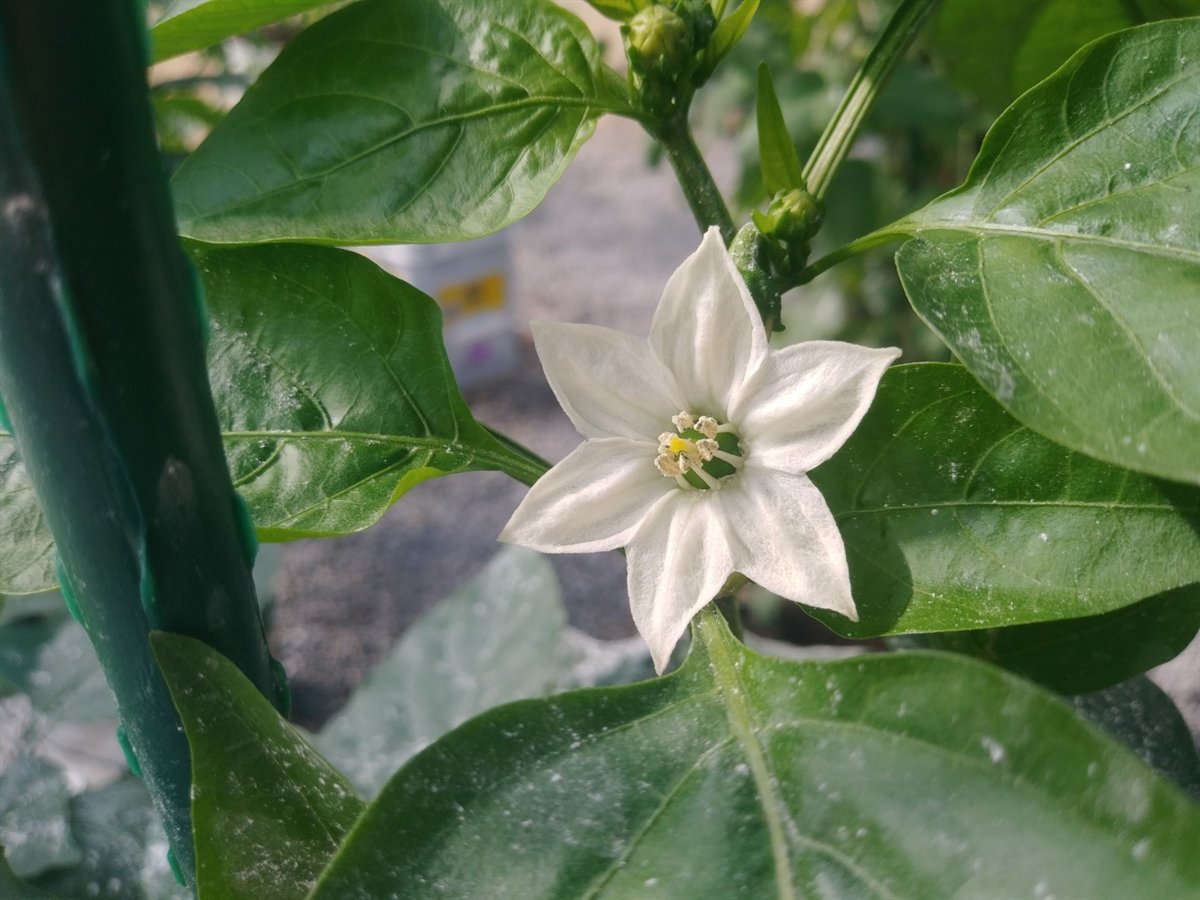
How Do You Lay Out Pepper Spacing in Raised Beds Step by Step?
The cleanest way to plan peppers is to mark the support and edge clearance first, then place plants. Gardeners who do the reverse usually end up with a bed that technically fits the right number of plants but has nowhere sensible to put a stake, emitter line, or hand during harvest. A simple layout workflow prevents that problem.
Step 1: Mark the edge clearance
Keep pepper stems about 6 inches in from the bed wall before you mark any plant centers. This protects room for drip lines, mulch, and hand access along the edges. It also gives fruiting branches a little lean space that does not immediately intrude into the neighboring plant.
Step 2: Decide whether the bed is a bell bed or a mixed-pepper bed
If bells or poblanos dominate, start with 18-inch centers and tighten only if the varieties are known to be compact. If the bed is mostly jalapenos or compact hot peppers, 15-inch centers are a better starting point. Mixed beds work best when larger-framed varieties sit on the back or north side and smaller-framed plants take the more accessible edge positions.
Step 3: Choose one support plan before planting
Use individual stakes, short corrals, or a simple horizontal twine line if your varieties tend to lean. Even when peppers are technically self-supporting, a light support system helps keep the canopy inside the intended footprint. That matters more when you plant at 12 to 15 inches than when you leave a wider 18-inch layout.
Step 4: Leave a maintenance lane in your thinking
Raised beds do not need a literal empty aisle through the middle, but they do need a reachable workflow. If you cannot picture where your hand goes to prune a damaged stem, patch an emitter, or pick the peppers in the center without crushing nearby branches, the layout is too dense already.
Step 5: Match watering to the spacing plan
Closer spacing dries the surface differently, shades the drip zone sooner, and can make wet foliage last longer after overhead watering. If you are transplanting starts grown from our seed starting calendar by zone or hardening off schedule, make sure the bed is ready for soil-level watering from the start. Layout and irrigation should be treated as one operating decision.
Once the plants are in, reevaluate after the first serious flush of branch growth. If two plants are already merging before fruit load peaks, remove a companion, shift a stake, or thin a nonessential side branch early rather than waiting for crowding to become a midseason headache.
Common Pepper Spacing Mistakes in Raised Beds
The first mistake is copying field-row spacing without adapting it to a four-foot bed. A number that works in long rows with open walking lanes on both sides often feels different inside a compact raised bed, especially once you add drip lines and mulch. The second mistake is underestimating how much broader sweet peppers become once fruit size increases. Bells are not giant plants, but fruiting branches absolutely change the spacing picture.
The third mistake is putting companion plants at every pepper stem. Basil, scallions, or flowers can work beautifully in pepper beds, but only when they live in border strips or corners. Tucking them directly at the base of every transplant steals airflow and makes irrigation less precise. The fourth mistake is assuming peppers never need support. A single stake or corral can keep the canopy upright enough that your original spacing still functions in late summer.
The last mistake is chasing the highest plant count instead of the highest season-long yield. A slightly calmer layout usually gives you better light distribution, cleaner fruit, faster harvests, and fewer broken branches. That is a better definition of efficiency than fitting two extra transplants into the bed and fighting them for the rest of the season.
FAQ: Pepper Spacing in Raised Beds
How far apart should pepper plants be in a raised bed?
Most raised-bed peppers perform best at about 15 to 18 inches apart, with the wider end reserved for larger bell, poblano, and heavily branched plants. Compact jalapenos and closely managed hot peppers can sometimes run tighter, but only if airflow and harvest access stay open. Spacing for the mature canopy is more reliable than spacing for the transplant size.
How many pepper plants fit in a 4x8 raised bed?
A 4x8 raised bed usually holds 8 to 12 pepper plants depending on variety, edge clearance, and whether you want one or two access-friendly rows. Eight to ten plants is the easiest range for home gardeners because it leaves room for mulch, drip lines, and hand access. Denser plantings are possible, but they increase the maintenance burden fast.
Can you plant peppers 12 inches apart in a raised bed?
Yes, but 12-inch spacing is a dense layout best suited to compact peppers, low-humidity climates, or gardeners who prune and harvest regularly. In many raised beds it is more productive to step back to 15 or 18 inches and protect airflow through summer. Tight layouts are least forgiving once fruit load starts bending branches outward.
Does pepper variety change spacing in raised beds?
Yes. Bell peppers, poblanos, and pimentos usually need more lateral room than compact jalapenos or small-fruited hot peppers because the canopy gets broader and heavier as fruit sets. Variety size matters more than seedling size at planting time. When in doubt, give the larger-framed variety the back or north-side position and let compact plants take the tighter lane.
Do peppers need stakes in raised beds?
Peppers do not always need stakes, but support becomes useful when fruit load is heavy, wind exposure is high, or plants are spaced tightly enough that falling branches would block neighboring plants. A simple stake or low corral often improves harvest access more than it changes spacing math. Support is especially helpful for bells and other large-fruited sweet peppers.
Related Guides
- How to Fill a Raised Garden Bed: Soil Mix Guide
- How to Use a Square Foot Gardening Spacing Chart Without Crowding Beds
- How to Use a Companion Planting Chart for Vegetables That Actually Works
- How to Use a Seed Starting Calendar by Zone for Reliable Spring Transplants
- Mulch and Evaporation Control in Vegetable Beds