
Tomato Spacing in Raised Beds for Healthier Plants and Easier Harvests
Tomato spacing in raised beds should change with support style, variety, and how much access you need for pruning, tying, and picking. Most home gardeners get better total harvests by planting slightly fewer tomatoes, keeping the canopy open, and matching spacing to stakes, cages, or trellis strings instead of squeezing every possible plant into the bed.
Tomato spacing in raised beds is easiest to get right when you stop thinking only about square footage and start planning around plant habit, support method, and root-zone access. A bed that looks underplanted in May often outperforms a crowded bed by July because indeterminate vines, cages, and leaf mass expand faster than most new gardeners expect, especially after the steady moisture and rich fill mix covered in our raised bed soil guide.
This page is intentionally narrower than our general guides on growing tomatoes in pots, when to transplant tomatoes, and how to prune tomato plants. The goal here is to answer the exact layout questions gardeners keep asking: how far apart should tomatoes be in a raised bed, how many fit in a 4x8 bed, and when does trellising let you tighten spacing without creating a humid disease trap.
University and extension guidance is consistent on the big picture. Iowa State says spacing should change with growth habit and training system. UNH Extension says a single tomato plant needs at least 18 inches in all directions in a raised bed. Penn State says staked plants can go 18 to 24 inches apart in the row. Those numbers are not competing rules. They describe different tomato shapes and different management intensity.
What Is the Right Tomato Spacing in Raised Beds?
The fastest way to choose spacing is to decide whether the plant will stay compact, stay vertical, or sprawl. Determinate tomatoes stop at a defined height and usually work best at the wider end of raised-bed spacing when caged. Indeterminate tomatoes keep growing and can be planted closer only if they are trained up stakes, strings, or weave systems and pruned consistently. If you will not prune or tie through the season, use the larger spacing number, not the optimistic one from the plant tag.
| Plant type and support | In-bed spacing | Best for | Main tradeoff |
|---|---|---|---|
| Determinate tomato in a cage | 24 to 30 inches | Slicers, paste tomatoes, simpler care | Needs more bed area per plant |
| Indeterminate tomato on stakes or string | 18 to 24 inches | Single-leader or disciplined two-leader pruning | Requires regular tying and sucker control |
| Indeterminate tomato in a large cage | 30 to 36 inches | Gardeners who want lower weekly maintenance | Fewer total plants per bed |
| Dwarf or patio tomato | 18 to 24 inches | Short beds, edge rows, mixed beds | Usually lower per-plant yield than full-size vines |
| Unsupported or sprawling plant | 36 inches or more | Low-input planting outside tight raised beds | Poor fit for most raised beds and harder disease control |
Iowa State's tomato spacing guidance is a good baseline for this table: determinate plants at 2 to 2 1/2 feet apart, staked indeterminate plants at 1 1/2 to 2 feet, caged indeterminate plants at 2 1/2 to 3 feet, and sprawling plants wider still. Raised beds do not cancel those rules. They just make you notice faster when you violate them.
The raised-bed-specific adjustment is edge clearance. Leave enough room for mulch, drip lines, and hand access around the outside of the root zone. A tomato placed too close to the bed wall often gets watered unevenly, rubs its cage against the edge, and steals the only open place you had for pruning or spotting pest damage.
Does Support Style Change Tomato Spacing in Raised Beds?
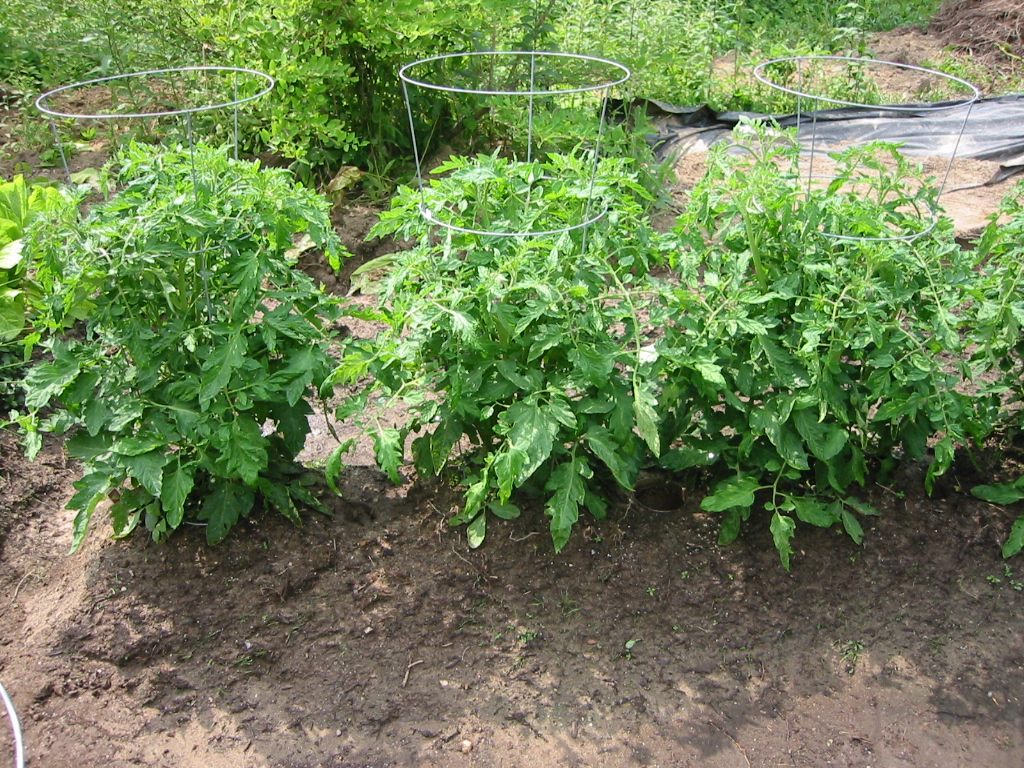
Yes, and this is the spacing decision most gardeners miss. Support style changes the final shape of the plant more than the transplant size suggests. A single staked vine can stay surprisingly narrow when lower suckers are removed early, while the same variety in a broad wire cage can spread well beyond 30 inches by midsummer. That is why Penn State's staking guidance allows tighter 18 to 24 inch spacing in the row, while Iowa State pushes caged indeterminate tomatoes farther apart.
Determinate tomatoes need room to bulk out
Determinate plants are often described as compact, but compact does not mean tiny. Their growth concentrates over a shorter period, and the cages or supports used for them often keep the plant bushy rather than narrow. In a raised bed, 24 inches is the practical minimum for most determinates, and 30 inches is more forgiving if you grow larger slicing varieties or want more room for companion crops at the edge. If you are using our companion planting chart, keep companions in the bed corners or border strips instead of at the stem base.
Indeterminate tomatoes earn tighter spacing only with real management
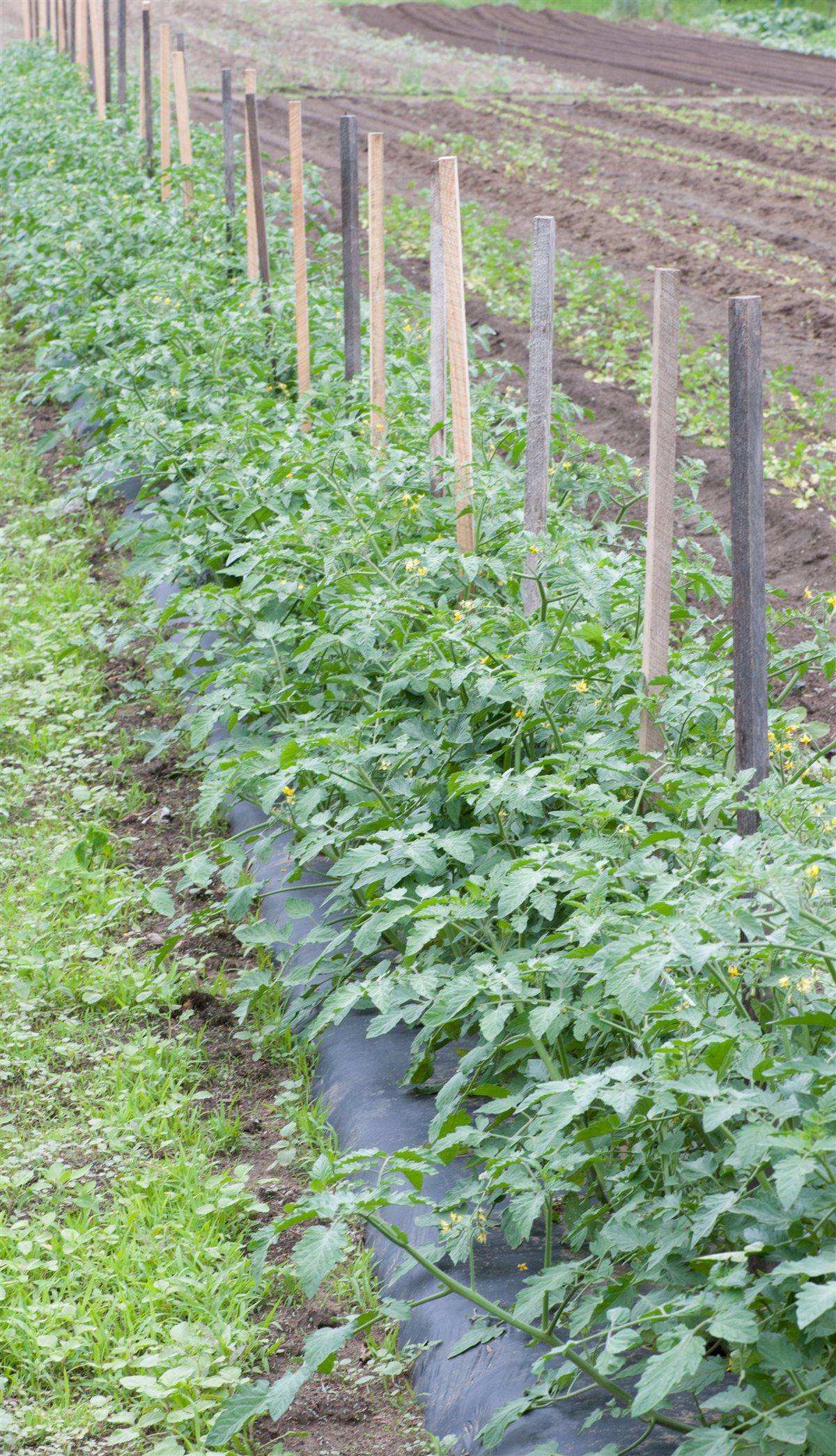
Indeterminate vines can be planted at 18 to 24 inches when you treat them like vertical crops. Penn State recommends that range for staked tomatoes in the row, and UMN Extension emphasizes that trellising improves air circulation and fruit access. The catch is maintenance. A tight trellis line only works if you remove extra suckers early, keep plants tied before they fall outward, and keep lower foliage off the soil splash zone.
If you want a lower-maintenance tomato bed, wider caged spacing is usually better than forcing a high-density trellis system you do not have time to maintain. A bed that is theoretically more productive on paper can become less productive in practice if the canopy turns damp, tangled, and impossible to inspect.
How Many Tomato Plants Fit in a 4x8 Raised Bed?
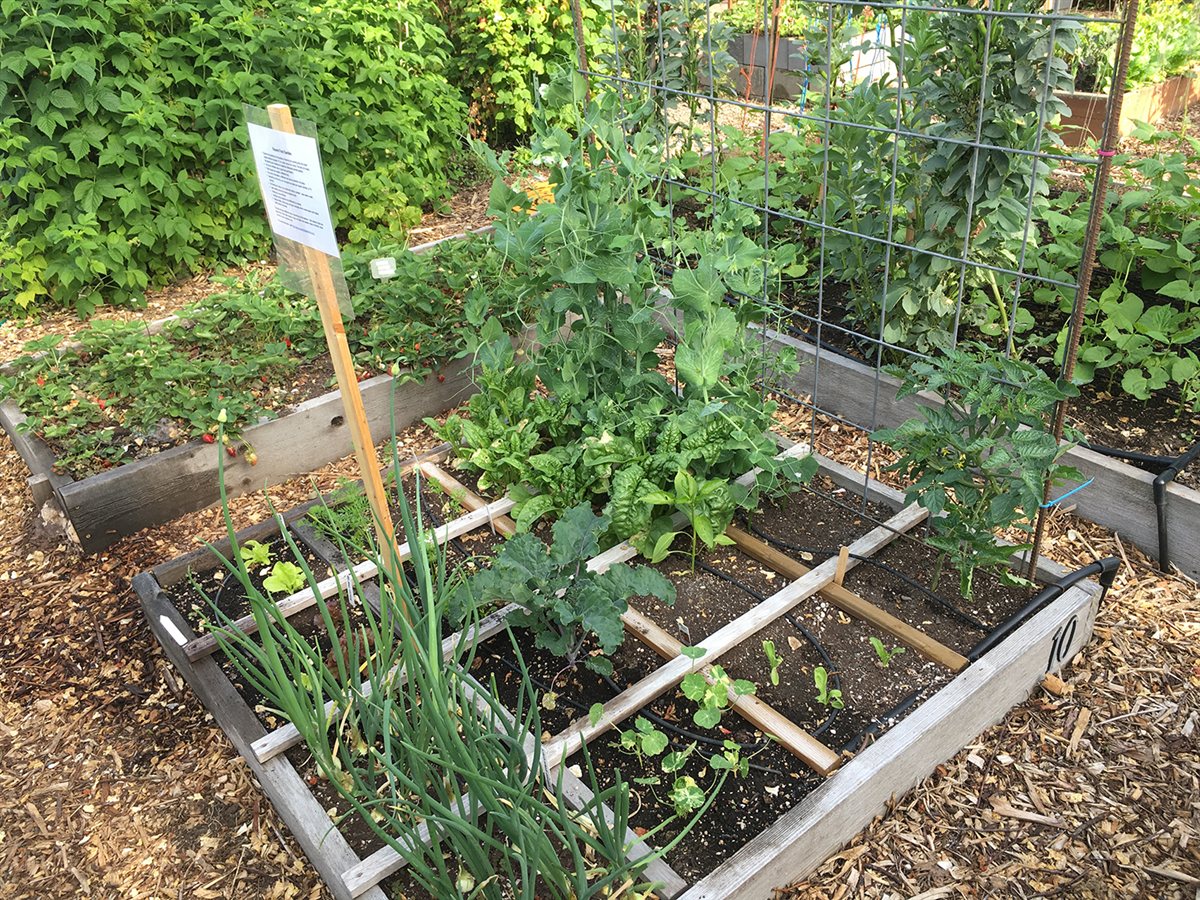
A 4x8 raised bed can hold anywhere from 4 to 8 tomatoes, but that wide range exists because gardeners mean different things when they say "fit." Theoretical fit is not the same as season-long fit. If you plant eight indeterminate tomatoes 24 inches apart in two rows, they may technically fit on day one. The real question is whether you can still tie, prune, water, scout, and harvest them once the bed is full of fruit and leaf mass.
| Layout style | Typical plant count | Who it suits | Why it works |
|---|---|---|---|
| One center row of large caged tomatoes | 3 to 4 | Low-maintenance home gardens | Easy harvest access on both sides |
| Two rows of determinate tomatoes | 4 | Paste and slicer growers who want roomy cages | Good airflow and room for mulch lanes |
| Two trellised rows of indeterminate tomatoes | 6 | Gardeners willing to prune and tie weekly | Balances density with access |
| Aggressive intensive trellis layout | 8 | Experienced growers in very managed beds | Possible only with disciplined vertical training |
For most households, 4 to 6 plants is the practical sweet spot in a 4x8 bed. Four large caged tomatoes usually outperform six neglected ones. Six trellised tomatoes can outperform four if you actually keep the training system clean. Eight tomatoes are possible, but they are best treated as an intensive system, not as a default recommendation for beginners.
The bed length also matters less than the bed width. A 4 foot wide bed is usually the upper limit for reaching the center without stepping into it, so every extra tomato in that width has a bigger management cost than people expect. That is especially true once you layer in the mulch and steady watering schedule from our tomato watering guide.
Why Does Spacing Matter for Yield, Disease, and Watering?
Spacing is not just about whether the plants physically fit. It controls humidity inside the canopy, how fast leaves dry after rain, how evenly water reaches the root zone, and whether fruit stays visible enough to harvest on time. A crowded bed can look wonderfully full while still performing worse because fruit hides, ripens unevenly, and sits longer in a damp canopy.
UMN's trellising guidance focuses on air circulation and keeping foliage off the ground for good reason. Wider spacing and vertical support reduce the amount of leaf-on-leaf contact that holds moisture and blocks airflow. That matters even more in raised beds, where fertility and water availability are often strong enough to create very lush, very dense growth. Tomatoes that receive excellent soil and irrigation can easily outgrow the casual spacing that seemed fine at transplant time.
Practical rule: if you cannot see the base of the main stem without pushing foliage aside, the planting is probably too dense for easy scouting and base watering.
Spacing also affects irrigation accuracy. Closely packed cages make it harder to place drip emitters well, to renew mulch around each plant, and to reach the stem base with a watering wand. Uneven water delivery then shows up as cracking, blossom-end rot, and stress swings that look like nutrition problems but are often layout problems first.
This is one reason our separate tomato articles naturally connect. The pruning page helps you keep a narrow trained shape, the watering page helps you protect steady moisture, and this spacing guide keeps those two systems possible in the first place.
What Changes for Cherry Tomatoes, Paste Tomatoes, and Dwarf Varieties?
Fruit type changes spacing mostly because it predicts plant habit. Many cherry tomatoes are indeterminate and exceptionally vigorous, which means they often need more top-end support and more pruning attention than slicers, not less. Paste tomatoes are commonly determinate or semi-determinate and can often be spaced with the middle numbers in the range. Dwarf and patio varieties are the best choice when you need tomato flavor in a limited bed without sacrificing all your access space.
| Tomato type | Usual plant habit | Recommended spacing | Notes |
|---|---|---|---|
| Large indeterminate slicer | Vigorous vine | 18 to 24 inches on trellis, 30 to 36 inches in cages | Great candidate for vertical training |
| Indeterminate cherry | Very vigorous vine | 24 inches is safer than 18 unless heavily pruned | Can outgrow small cages quickly |
| Determinate paste tomato | Compact to medium bush | 24 to 30 inches | Good fit for two-row raised-bed layouts |
| Dwarf tomato | Short, compact plant | 18 to 24 inches | Best for edge rows or mixed planting plans |
| Patio container type grown in a bed | Small bush | 18 inches | Can share space with herbs more easily |
If you only remember one thing from this table, remember that cherry tomatoes often need surprisingly generous spacing because they stay productive for a long time and can overwhelm a bed late in the season. Gardeners often underestimate them because the fruit is small. The plant is not.
How Much Edge Clearance and Access Space Do You Need?
Raised beds introduce a spacing layer that in-ground row guides do not always mention clearly: edge clearance. A tomato planted right against the frame wastes some of the bed's best management space. Leave room for irrigation tubing, mulch, hand access, and the slight outward lean that cages or stakes can create once fruit load builds. In practical terms, that usually means keeping the transplant 6 to 8 inches in from the bed wall even when center-to-center plant spacing is technically correct.
Access direction matters too. Put taller tomatoes on the north side of the bed in most U.S. backyards so they do not shade shorter herbs or edge crops through the middle of the day. If your bed runs east to west, a single tall row on the north edge is often simpler than two dense rows. If your bed runs north to south, staggered rows can work well as long as you still preserve a reach lane.
Do not forget the space outside the bed. Harvest baskets, pruning shears, and tie supplies need room too. A tightly packed bed bordered by a narrow path is much harder to manage than the same bed with a stable walkway where you can stop, inspect, and work carefully.
How Do You Lay Out Tomato Spacing in Raised Beds Step by Step?
The cleanest way to build a raised-bed tomato layout is to set the support system first, then place plants around it. Most spacing mistakes happen when gardeners plant first and improvise cages or stakes later. By then the bed is already committed.
- Pick the support system before you buy plants. Decide whether the bed will use cages, single stakes, a string trellis, or a weave system.
- Match plant type to support style. Put compact determinates where cages can widen; put indeterminates where vertical support can stay straight and accessible.
- Mark edge clearance first. Measure 6 to 8 inches in from each wall before you mark any plant centers.
- Lay out centers, not leaves. The transplant can be tiny; the center spacing still needs to match the mature plant.
- Reserve one access strategy. Either leave a reachable center lane, keep one row only, or maintain generous staggered row spacing that still allows hand access.
- Install irrigation with the spacing in mind. One emitter line weaving randomly through cages is harder to tune than a simple planned path.
- Adjust after the first pruning cycle. If the canopy is closing too early, remove extra suckers or thin companion plants before the problem compounds.
That process sounds more deliberate than many backyard beds, but it saves time once summer heat arrives. It also pairs well with our tomato transplant timing checklist because you can plant straight into a prepared support and irrigation layout instead of disturbing roots a week later.
Common Tomato Spacing Mistakes in Raised Beds
The first mistake is spacing by nursery pot size instead of mature habit. Four-inch transplants tempt gardeners to use every open inch, then suddenly everything is touching by the time the first fruit sets. The second mistake is assuming all tomatoes of the same fruit type grow the same way. Many cherry tomatoes are more aggressive than slicers, and some determinate paste types are still broad enough to need real elbow room.
The third mistake is trying to solve crowding with late hard pruning. Pruning helps shape the plant, but it cannot fully rescue a bed that was laid out too tightly for its support system. The fourth mistake is tucking basil, marigolds, or lettuce directly at every tomato stem. Companion crops should help bed function, not block airflow and watering access at the trunk.
The last mistake is confusing maximum plant count with maximum harvest. A slightly wider, calmer layout often produces cleaner fruit, easier harvests, and fewer disease losses over the full season. That is a better definition of efficiency than a bed that looks packed in June and exhausted by August.
FAQ: Tomato Spacing in Raised Beds
How many tomato plants fit in a 4x8 raised bed?
A 4x8 raised bed usually holds 4 to 8 tomato plants depending on support style, variety, and how much access you want for pruning and harvest. Four to six plants is the most practical range for home gardeners because it preserves airflow and makes watering and scouting easier. Eight plants is an intensive layout, not the default recommendation.
Does trellising change tomato spacing in raised beds?
Yes. Trellised or staked indeterminate tomatoes can usually be planted closer together than caged or sprawling plants because the canopy stays narrower and fruit stays off the soil. Tight trellis spacing still requires pruning discipline and a realistic access lane.
How far apart should determinate tomatoes be in a raised bed?
Determinate tomatoes usually perform best at about 24 to 30 inches apart in raised beds, especially when they are grown in cages. Compact patio types can go a little tighter, while larger determinate slicers still need room for airflow and harvest access. A cramped cage defeats the point of using a determinate plant.
Can you plant tomatoes 18 inches apart in a raised bed?
You can plant tomatoes 18 inches apart when they are indeterminate varieties trained tightly on stakes or string, but that spacing is aggressive and works best for gardeners who prune regularly. It is usually too tight for large cages or unsupported plants. If you are unsure, use 24 inches instead.
What is the best raised bed layout for tomatoes?
The best raised bed layout matches tomato size to bed width, keeps tall plants on the north side, preserves edge clearance for irrigation and mulch, and leaves enough access for tying, pruning, and picking. A neat layout usually outperforms a maximum-density layout over the whole season. Good spacing is a maintenance decision as much as a planting decision.
Related Guides
- How to Fill a Raised Garden Bed: Soil Mix Guide
- When to Transplant Tomatoes for Stronger Roots and Less Shock
- How to Prune Tomato Plants for Better Airflow and Easier Harvests
- How Often to Water Tomato Plants for Steady Growth and Better Fruit
- How to Use a Companion Planting Chart for Vegetables That Actually Works
Sources
- Iowa State University Extension and Outreach: What is the proper spacing when planting tomatoes in the garden?
- University of New Hampshire Extension: How to Utilize Raised Beds for Small Space Gardening
- Penn State Extension: Stake your Tomatoes
- University of Minnesota Extension: Growing tomatoes in home gardens
- University of Minnesota Extension: Three ways to trellis tomatoes