
Cucumber Spacing in Raised Beds for Trellises, Bush Types, and Cleaner Harvests
Cucumber spacing in raised beds is usually 12 inches apart for trellised vining plants, 18 to 24 inches for bush types, and 24 to 36 inches for unsupported vines. The key decision is whether the plant grows upward or across the soil surface, because vertical vines can fit twice as many productive plants in the same 4x8 bed without closing airflow lanes.
Cucumber spacing in raised beds depends on trellised cucumber spacing, cucumber plant spacing by variety, and how much airflow you can preserve once vines start running. A spacing plan that looks efficient at transplanting can fail by first harvest if leaves block irrigation, flowers hide under the canopy, or fruit wedges behind a bed wall where you cannot see it.
Use this as a cucumber spacing chart for real beds, not as a generic packet-back number. The goal is to choose the fewest plants that can cover the support cleanly, produce regularly, and still leave room for hands, mulch, and water lines. If you already use our square foot gardening spacing chart or pepper spacing in raised beds guide, this page applies the same layout discipline to a crop that grows much faster sideways.
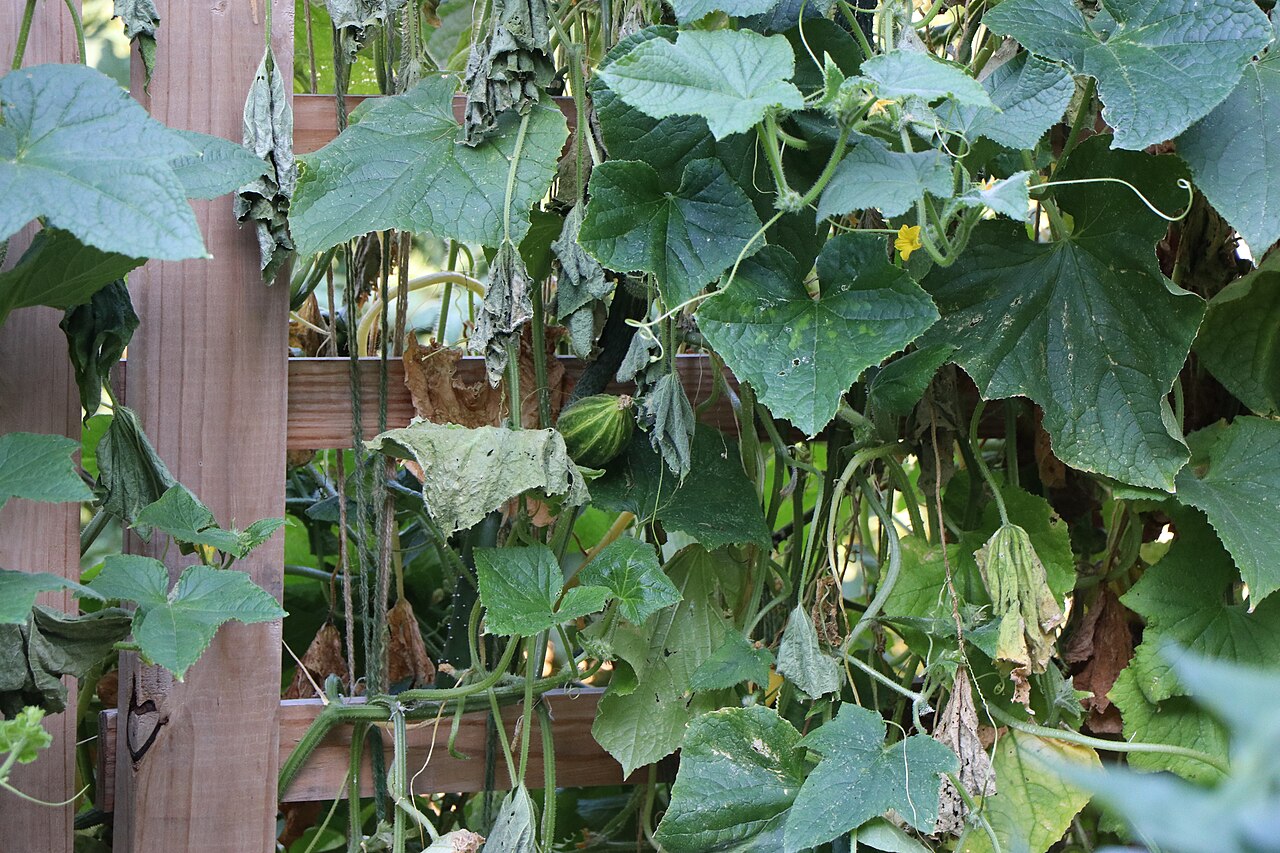
What Is the Best Cucumber Spacing in Raised Beds?
The safest default for vining cucumbers in raised beds is 12 inches apart when each plant has a trellis. That distance gives every transplant a defined vertical lane while keeping roots close enough to use a single drip line or soaker hose. If you do not trellis, increase spacing sharply. Unsupported cucumber vines can easily use 24 to 36 inches per plant because the stems root, branch, and fan across the bed surface.
Bush cucumbers sit between those extremes. They do not run as aggressively as full-size slicers, but they still form a broad leaf canopy. Most raised beds handle bush types at 18 to 24 inches if the bed has clear edges and you pick fruit often. Dense bush plantings become frustrating when leaves stack over fruit and you discover oversized cucumbers after the plant has already diverted energy away from new blooms.
Extension guidance supports using spacing as a range rather than a fixed rule. The University of Minnesota recommends cucumber seed spacing and thinning decisions based on whether plants are in hills, rows, or vertical systems, while the University of Georgia notes that cucumbers can be grown vertically for small gardens and that trellised plants are commonly thinned to about 12 inches in the row. Those numbers become more useful when you translate them into raised-bed access.
| Planting style | In-bed spacing | Best use | Main risk |
|---|---|---|---|
| Trellised vining cucumber | 12 inches apart | 4x8 beds, narrow beds, small-space gardens | Trellis overload if plants are not guided early |
| Bush cucumber | 18 to 24 inches apart | Container-style raised beds and edge plantings | Hidden fruit and dense leaf cover |
| Unsupported vining cucumber | 24 to 36 inches apart | Large beds with open soil surface | Vines swallowing paths, herbs, and nearby crops |
| Square foot cucumber spacing | 1 plant per square foot only with support | Vertical grid beds with weekly tying or redirecting | Too many plants if support is weak or short |
If the bed already has a deep soil mix from our raised bed fill guide, use the spacing range conservatively. Rich soil and steady moisture create bigger leaves, faster runners, and heavier fruit load than a thin garden row.
How Far Apart Should Trellised Cucumbers Be in a Raised Bed?
Trellised cucumber spacing works best at 12 inches for most slicing and pickling varieties because the trellis changes the plant footprint. Instead of letting each vine occupy a wide horizontal patch, you train the main stem upward and guide side runners back toward the support. That lets a four-foot-wide bed keep open soil on the front side for mulch, watering, and harvest footing.
A long-side trellis is the easiest layout for a 4x8 bed. Install a cattle panel, string frame, or rigid netting along one eight-foot edge, then place 6 to 8 plants roughly 12 inches apart. Keep the stems 6 to 8 inches from the bed wall so roots are not trapped in a dry corner and so lower leaves have air around them. If the trellis leans inward as an A-frame, reduce the count by one or two plants because the canopy will angle over the bed.
Long-side trellis layout
For a straight vertical trellis, plant six cucumbers for a low-maintenance bed or eight cucumbers for a high-production bed. Six plants give you room to guide vines, remove damaged leaves, and harvest without snapping side shoots. Eight plants can work, but the routine changes. You need to redirect runners every few days during fast growth, pick fruit while it is still young, and remove leaves that lie on wet soil.
A-frame and arch trellis layout
An A-frame or arch gives more climbing surface, but it also changes reach. If fruit hangs inside the frame where you cannot see it, the bed becomes harder to manage. Use 12-inch spacing only on the outside edges where you can inspect both leaves and fruit. If plants are set inside the arch footprint, space them closer to 15 inches and leave a clear hand lane.
Practical spacing rule: count trellis lanes before you count plants. A raised bed with eight strong vertical lanes can support eight cucumbers, but a weak net, short panel, or crowded arch should be planted at six.
Trellising also makes disease checks faster. Cucumbers are prone to leaf problems when foliage stays wet and crowded. A vertical lane does not prevent disease by itself, but it gives you a cleaner inspection path and makes it easier to remove leaves that sit on the soil.

How Many Cucumber Plants Fit in a 4x8 Raised Bed?
A 4x8 raised bed can fit 6 to 8 trellised cucumber plants, 4 to 6 bush cucumber plants, or 3 to 4 sprawling vining plants. The trellised option is usually the best balance for homeowners because it produces more clean fruit per square foot while preserving access for watering and picking. The lower plant count often beats the higher count when the bed also holds basil, flowers, peppers, or summer greens.
The reason is not root space alone. Cucumbers need light, pollinator access, and consistent moisture. If you plant too many vines, leaves overlap so heavily that flowers hide, fruit gets missed, and the soil surface becomes hard to inspect. Overcrowding also makes the bed less resilient during humid weather because the canopy takes longer to dry after rain or overhead watering.
| Layout | Plant count | Spacing | Best for |
|---|---|---|---|
| One long-side vertical trellis | 6 plants | About 15 inches apart | Low-maintenance beds and mixed plantings |
| One dense long-side trellis | 8 plants | About 12 inches apart | Gardeners who harvest every 1 to 2 days |
| Two short-end trellises | 4 to 6 plants | 12 to 15 inches apart | Beds with middle crops that need sun |
| Bush cucumbers in two staggered rows | 4 to 6 plants | 18 to 24 inches apart | No-trellis beds and compact varieties |
| Unsupported vining cucumbers | 3 to 4 plants | 24 to 36 inches apart | Large open beds with no companion crops |
If cucumbers share a bed with tomatoes or peppers, place the cucumber trellis on the north or northwest side in most U.S. gardens so it casts less midday shade on lower crops. For tomato-heavy beds, use our tomato spacing in raised beds guide first, then decide whether the remaining trellis edge is truly wide enough for cucumbers. Cucumber vines should not be the crop you squeeze into leftover space.
When Should You Use Bush Cucumber Spacing Instead of Trellis Spacing?
Use bush cucumber spacing when you have a short bed, a low trellis budget, or a variety bred for compact growth. Bush types are useful for patios and small raised beds because they keep their footprint more contained than long-vining slicers. They are not maintenance-free, though. A bush cucumber still needs space for leaves, flowers, fruit, and harvest access.
Start bush cucumbers at 18 inches apart if the bed drains well and gets steady morning sun. Move to 24 inches if the climate is humid, the bed is surrounded by tall crops, or you know you will not harvest every other day. Compact varieties often advertise patio or container suitability, but the label does not mean the leaves can overlap without consequences. Dense leaf cover can hide fruit until it turns oversized and seedy.
Best raised-bed positions for bush cucumbers
Bush cucumbers perform best on bed edges where leaves can spill slightly outward without covering another crop. They also work at the front of a deeper vegetable bed if the back of the bed holds taller trellised crops. Avoid placing bush cucumbers in the exact center of a 4-foot-wide bed unless you can reach from both sides. The plant may stay compact, but the harvest zone still needs hands and visibility.
If you want a mixed planting, pair bush cucumbers with short, early crops that finish before the cucumber canopy closes. Fast radishes, spring lettuce, or scallions can work as early-season fillers, but they should be harvested before vines demand full light. For longer companion decisions, use the framework in our companion planting chart for vegetables and prioritize moisture compatibility over folklore.
How Do You Prevent Crowding, Mildew, and Hidden Fruit?
Spacing prevents the first layer of crowding, but management keeps the bed productive. Cucumber vines grow quickly once nights warm up, and a bed can shift from open to tangled in a week. The best routine is a short inspection every two or three days during peak growth: guide new runners to the trellis, remove leaves that sit on the soil, and pick fruit before it becomes oversized.
Watering matters as much as plant count. Cucumbers have shallow, active roots and respond poorly to swings between dry soil and heavy rescue watering. Soil-level irrigation protects the canopy better than frequent overhead watering because wet leaves in a dense bed are slower to dry. If your bed dries unevenly, pair this spacing plan with our tomato watering guide for the broader even-moisture logic, then adapt frequency to cucumbers' faster water demand.
Airflow checks that matter
- You can see the main stem base of each plant without lifting three layers of leaves.
- Fruit is visible from at least one side of the bed or trellis.
- Lower leaves do not stay pressed against wet mulch after irrigation.
- Runners are attached to the trellis before they lock into neighboring crops.
- You can reach irrigation emitters or a soaker hose without breaking vines.
Pruning should be light and purposeful. Remove damaged, yellowing, or soil-contact leaves first. Then redirect side runners instead of cutting every lateral shoot. Heavy pruning can reduce leaf area too much, especially in hot weather, but no pruning at all can turn a dense raised bed into a humid canopy with hidden fruit and slow harvests.

When Should You Plant Cucumbers So Spacing Holds Up?
Cucumber spacing only works if plants grow at the expected pace. If cucumbers are seeded or transplanted into cold soil, they stall, and gardeners often overplant to compensate. Once warmth arrives, all those extra plants surge at the same time and the bed becomes crowded. Wait for warm soil and stable nights rather than filling gaps with too many backup seeds.
The University of Minnesota advises planting cucumbers after the danger of frost has passed and soil has warmed, while the University of Georgia emphasizes warm conditions, fertile soil, and steady water. For raised beds, that means spacing decisions should be made after the bed is ready, the trellis is installed, and irrigation is tested. Planting first and finding support later is how vines end up lying across the bed before the trellis can help.
Direct seeding vs transplants
Direct seeding gives cucumbers a clean start because roots are not disturbed, but you need to thin decisively. Sow extra seeds only where a final plant can remain, then thin to the planned spacing as soon as seedlings are established. Transplants work when they are small and not rootbound. Set them at final spacing immediately instead of clustering them for a short-term full look.
If you start cucumbers indoors, keep the indoor period short and harden seedlings carefully. Our 10-day hardening off schedule is useful for timing outdoor exposure, but cucumbers are more root-sensitive than tomatoes and peppers. Do not hold them in small pots until vines are already running.
Which Cucumber Raised Bed Layout Should You Choose?
Choose the layout by maintenance level, not just harvest ambition. If you want the most forgiving bed, plant six trellised cucumbers on one long side of a 4x8 bed and reserve the front half for mulch, drip access, and short-season crops. If you want maximum output and can harvest frequently, plant eight trellised cucumbers at 12-inch spacing and commit to guiding vines before they tangle.
Choose bush cucumbers when the bed is too short for a strong trellis or when you need a lower profile near a patio, fence, or windy exposure. Choose unsupported vines only when the bed is mostly dedicated to cucumbers. A sprawling vine can be productive, but it is a poor neighbor in a mixed raised bed because it moves into every open strip.
| Your situation | Best layout | Plant count | Reason |
|---|---|---|---|
| Small garden, strong trellis, frequent harvest | Dense vertical row | 8 plants in 4x8 | Highest yield per square foot |
| Busy household, mixed raised bed | Roomy vertical row | 6 plants in 4x8 | Better access and fewer missed fruit |
| No trellis, compact variety | Bush edge planting | 4 to 6 plants in 4x8 | Keeps leaves visible and harvestable |
| No trellis, vining variety | Dedicated cucumber bed | 3 to 4 plants in 4x8 | Prevents vines from overrunning companions |
The best cucumber bed is the one you can inspect quickly. Cucumber fruit changes size fast, and a layout that hides fruit for four days can shift from perfect harvest to oversized harvest. Spacing is successful when it makes the routine easier, not when it proves the bed can hold the highest possible number of plants.
FAQ: Cucumber Spacing in Raised Beds
How far apart should cucumbers be in a raised bed?
Trellised vining cucumbers usually work best at 12 inches apart in a raised bed, while larger unsupported vines need 24 to 36 inches because the canopy spreads across the soil. Bush cucumbers often fit at 18 to 24 inches if the bed has open edges and steady watering. Use the wider end when humidity is high or harvest access is limited.
How many cucumber plants fit in a 4x8 raised bed?
A 4x8 raised bed usually fits 6 to 8 trellised cucumber plants along one long side, 4 to 6 bush cucumber plants, or 3 to 4 sprawling vining plants. The higher counts only work when harvest access and airflow are planned before planting. Six trellised plants is the easiest layout for most households.
Can cucumbers be planted 12 inches apart?
Yes, 12-inch spacing is realistic for trellised cucumber vines because the canopy grows upward instead of across the bed surface. It is too tight for unsupported vines unless the variety is compact and you are willing to prune, guide, and harvest frequently. If fruit becomes hard to see, the bed is too dense.
Is it better to trellis cucumbers in raised beds?
Trellising is usually better in raised beds because it saves soil surface, improves harvest visibility, and keeps vines from swallowing nearby crops. It also makes spacing math easier because each plant gets a vertical lane instead of a wide ground footprint. Use a rigid support before planting so vines can climb early.
Do cucumber plants need pruning in raised beds?
Cucumbers do not need formal pruning the way indeterminate tomatoes do, but light pruning helps in dense raised beds. Remove broken leaves, redirect runners, and thin excess side growth only when it blocks airflow, irrigation access, or fruit visibility. Avoid stripping healthy leaves during hot weather.
Related Guides
- How to Use a Square Foot Gardening Spacing Chart Without Crowding Beds
- How to Use a Companion Planting Chart for Vegetables That Actually Works
- Pepper Spacing in Raised Beds for Healthier Plants and Higher Yields
- Tomato Spacing in Raised Beds for Healthier Plants and Easier Harvests
- How to Fill a Raised Garden Bed: Soil Mix Guide