
How Often to Water Tomato Plants for Steady Growth and Better Fruit
How often to water tomato plants depends on whether they are in the ground or in containers, how fast the soil drains, and whether the plant is still growing leaves or filling fruit. Most watering failures come from large moisture swings rather than from being slightly early or slightly late on any one irrigation day.
How often to water tomato plants changes as the root system expands, the weather turns hotter, and the plant shifts from leaf growth into flowering and fruit fill. A usable tomato watering schedule has to account for pot size, mulch, soil texture, and whether you are managing patio plants from our tomatoes in pots guide or recently set transplants from our tomato transplant timing guide.
The working target is even moisture, not constantly wet soil. Missouri Extension says home garden tomatoes generally need 1 to 2 inches of water per week and do better with thorough soaking than with frequent light sprinkles, while UMN notes that containers often need daily watering and may need more than once per day once summer heat and fruit load peak. Those two recommendations are not contradictory. They describe two different root environments with two very different moisture reserves.
That distinction matters because the most common tomato quality problems are tied to irregular watering, not just drought in the obvious wilted sense. Moisture swings are a major driver behind the next-wave failures discussed in our tomato blossom end rot guide, and they also set up fruit cracking, leaf curl, and stalled ripening when a plant cycles between dry stress and sudden saturation.
Use this page as a calibration guide. Instead of asking whether tomatoes should be watered on a fixed calendar, ask how deep the root zone is staying moist, how fast your site dries between soakings, and whether the plant is telling you it needs longer intervals, shorter intervals, or simply a better delivery method.
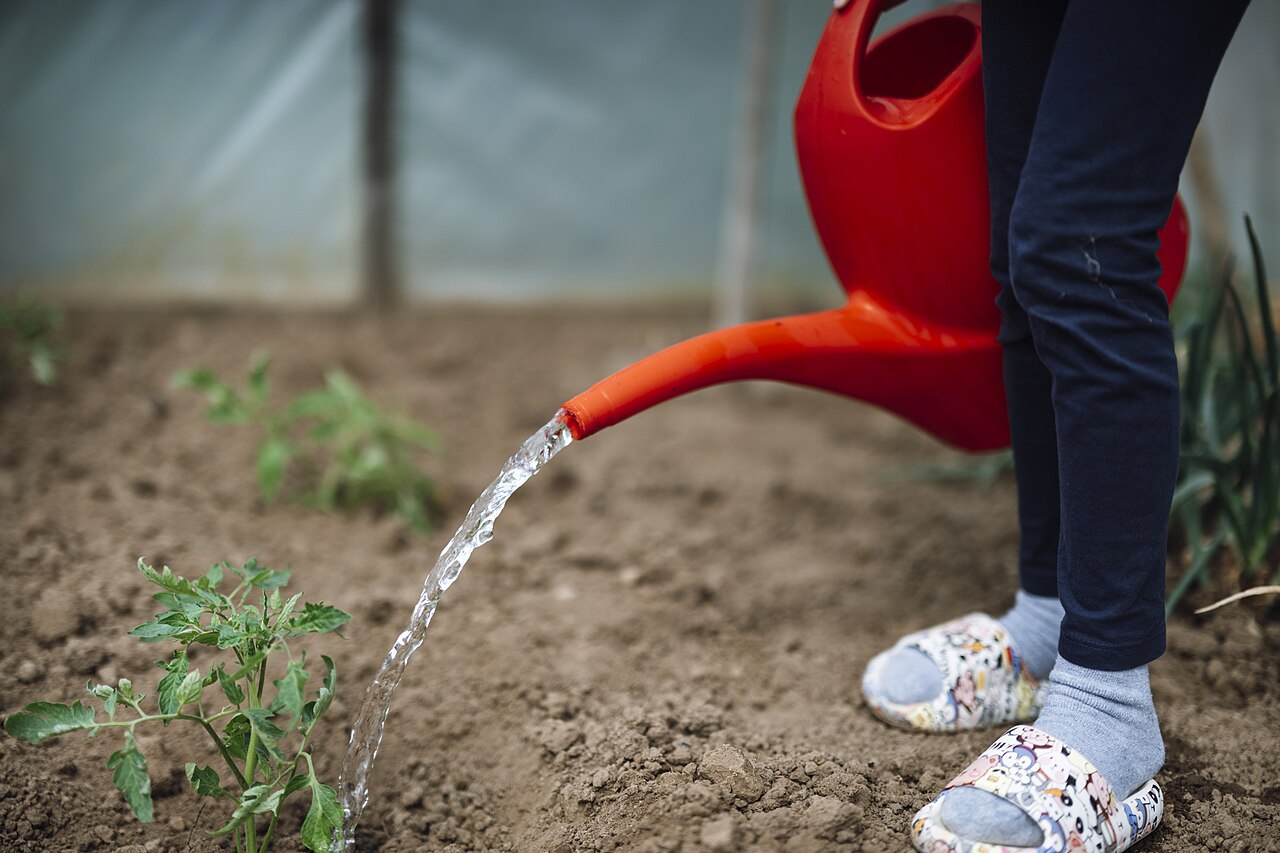
What Actually Changes How Often You Water Tomato Plants?
The best watering frequency is not a universal every-two-days rule. It is a response to how much water the plant can access between irrigations and how quickly that supply is being used. A mulched in-ground tomato in loam behaves very differently from a dark plastic pot on a windy patio, even if both are the same variety and height.
Start with five variables: root volume, soil texture, temperature, fruit load, and mulch. Root volume decides how much stored moisture the plant has access to. Soil texture determines how quickly that moisture drains or disappears to the air. Temperature and wind decide how quickly the plant uses water through transpiration. Fruit load matters because tomatoes become far thirstier once they are filling fruit, and fruit quality gets less forgiving when supply becomes erratic. Mulch slows the entire cycle by reducing evaporation and soil splash, which is why both UMN and Georgia Extension emphasize mulch as a moisture-management tool rather than just a weed-control layer.
| Variable | What It Does | What Usually Happens to Frequency |
|---|---|---|
| Heavy clay or dense soil | Holds water longer but drains slowly | Longer interval, slower application, greater risk of overwatering |
| Sandy or fast-draining soil | Loses water quickly | Shorter interval, deeper soak needed to reach roots |
| Small container | Has little moisture reserve | Daily checks and often daily watering |
| Large fruit load | Raises plant demand sharply | Higher weekly total and less room for missed days |
| Organic mulch | Reduces evaporation and splash | More stable interval and fewer dramatic dry-downs |
| Heat wave above 90 degrees F | Accelerates transpiration and surface drying | Daily or every-other-day irrigation may become necessary |
Support and pruning also change moisture behavior. A tied, airier plant from our tomato pruning guide dries faster after irrigation than a sprawling cage packed with extra suckers, but it may also expose fruit more directly to hot afternoon sun if canopy cover gets too thin. Watering rhythm should be adjusted after major pruning or when fruit suddenly becomes more exposed.
How Often Should You Water Tomato Plants in the Ground?
For in-ground tomatoes, the best baseline is deep watering one or two times per week when rain is not covering the need. Missouri Extension gives home gardeners the widely used target of 1 to 2 inches of water weekly and specifically warns against frequent light irrigation because it encourages shallow rooting. That advice works because a deep soak pushes moisture into the active root zone and buys you a longer stable window between waterings.
What changes through the season is how quickly you use up that weekly total. A recently transplanted tomato has a smaller root footprint and less leaf area, so it needs more careful monitoring but not necessarily a giant volume. Once flowering starts and fruit begins sizing, daily plant demand rises. During peak summer heat, UMN advises that vegetable beds may need daily or every-other-day watering when daytime temperatures are above 90 degrees and nights stay above 70 degrees. That is not a new universal schedule for the whole season. It is a temporary adjustment for heat-driven moisture loss.
Use plant stage to set your baseline
After transplanting, keep the root ball and the surrounding soil evenly moist while the plant establishes. Once roots spread and new growth is steady, lengthen the interval and water more deeply. When the first clusters are sizing up, stop letting the bed swing from dusty-dry to soaked. That is the stage when fruit disorders become easier to trigger. By late season, large vines can use a surprising amount of water if they are carrying a heavy crop, especially in raised beds that shed water faster than adjacent native soil.
| Stage | Typical Frequency | What to Watch | Adjustment Trigger |
|---|---|---|---|
| First 7 to 10 days after transplant | Check daily; water when the root ball starts to dry | Top several inches should not stay powdery | Hot wind, thin soil, or raised beds shorten the interval |
| Vegetative growth before fruit set | Usually 1 to 2 deep soakings per week | Moisture 4 to 6 inches down | Leaves wilting by morning means the interval is too long |
| Flowering and fruit set | Usually every 3 to 4 days in dry weather | Even moisture matters more than big flushes | Blossom end rot risk rises when the bed dries hard between irrigations |
| Heavy fruit load in hot weather | Every 2 to 3 days, or daily during extreme heat | Fruit cracking, leaf curl, and dry mulch surface | Heat above 90 degrees F or beds drying six inches down |
| Cool or rainy spell | Pause and reassess | Wet soil, yellow lower leaves, slow growth | Let the bed breathe before adding more water |
The key is to treat that table as a diagnostic starting point, not a timer. If your finger, trowel, or moisture probe shows the soil is still damp several inches down, skip the irrigation. If it is dry six inches down and fruit is sizing, do not wait for dramatic leaf wilt before you act.
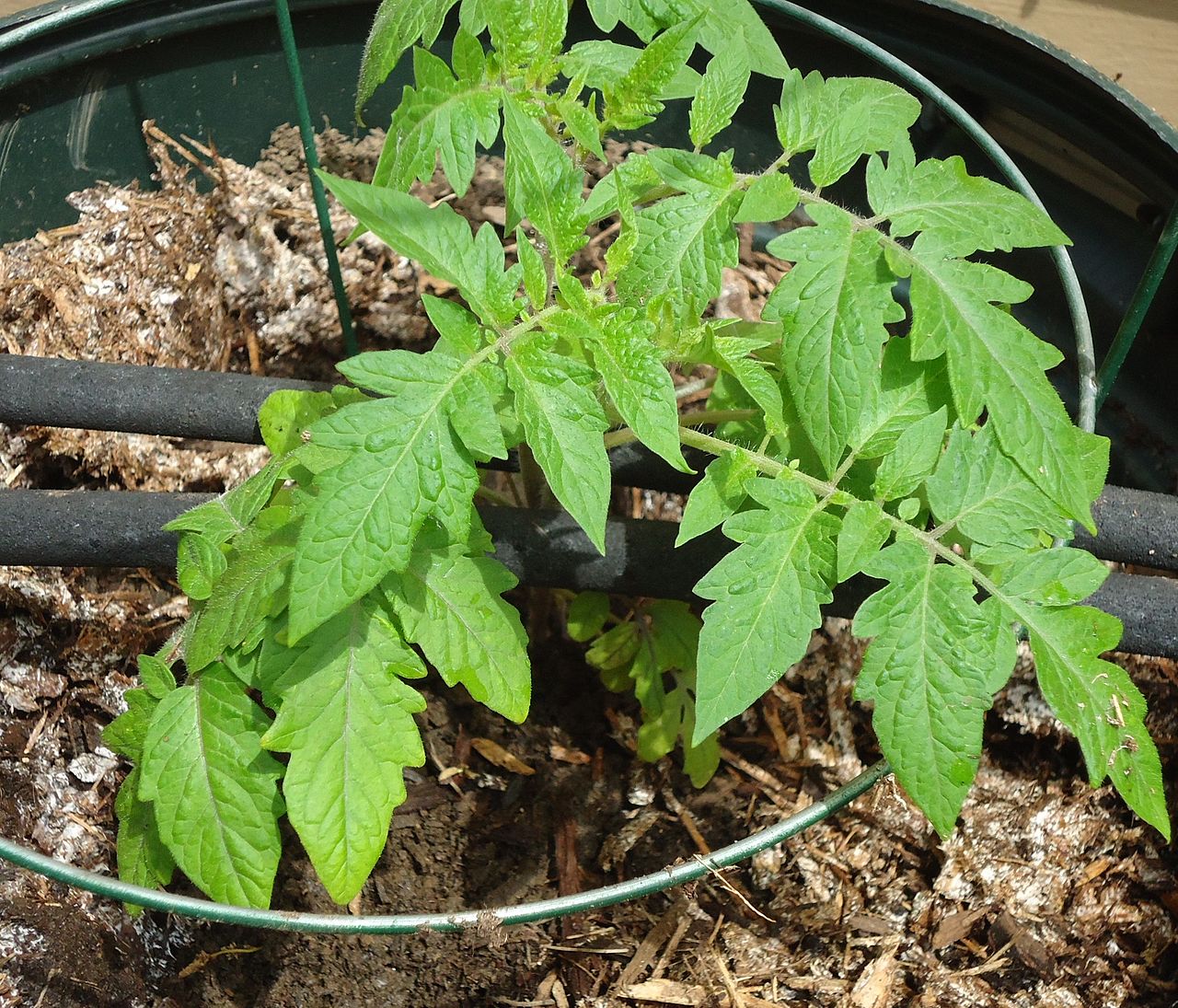
Do Tomato Plants Need Water Every Day in Pots?
Often, yes. Container tomatoes live in a restricted root zone that heats up faster, drains faster, and runs out of stored moisture faster than a garden bed. UMN says container plants usually need at least daily watering and may need more than once per day depending on container size and temperature. Missouri Extension makes the same point more narrowly for tomatoes by noting that plants in small containers may need daily watering.
That does not mean every pot should be watered on autopilot every morning whether it needs it or not. It means container tomatoes deserve daily inspection, and the threshold for watering arrives much sooner than it does in the ground. Large fabric pots may stay in range longer than a black plastic bucket. A 5-gallon pot with a fruiting indeterminate tomato can swing from fine at sunrise to stressed by late afternoon in windy weather. The smaller the container, the less forgiveness you have.
Use the container itself as part of the diagnosis
Lift the pot if it is small enough, feel the weight difference between freshly watered and nearly dry media, and check the top couple of inches with your fingers. You are looking for moist but aerated media, not permanent wetness. If water sits in a saucer too long, root oxygen drops and the plant can look limp even though it is technically overwatered. UMN specifically warns that tray water can create prolonged waterlogging if it is never dumped.
| Setup | Usual Pattern | Why It Dries at That Rate |
|---|---|---|
| 5-gallon nursery pot | Daily in warm weather, sometimes twice daily in peak heat | Small soil volume and warm sidewalls |
| 10-gallon fabric grow bag | Daily checks; often every day once fruit load builds | Good aeration but faster edge evaporation |
| Large self-watering planter | Every 1 to 3 days depending on reservoir size | Stored water buffers short hot spells |
| Half barrel or large decorative planter | Every 1 to 2 days in summer | Bigger root zone holds more moisture but fruiting vines still drink heavily |
If you want fewer hand-watering decisions, increase soil volume rather than simply adding more frequent shallow splashes. That is one reason reservoir-based setups from our wicking bed guide or larger containers from our pots guide are easier to manage than undersized patio planters.
How Much Water Do Tomato Plants Need Each Week?
A reliable homeowner benchmark is 1 to 2 inches of water per week, counting rainfall. The lower end fits milder weather and soils that hold moisture well. The higher end becomes more common when plants are large, fruiting, mulched lightly, or growing in sandy or raised-bed conditions. UMN also gives a useful scale reference for hot weather: about 20 gallons for a 4-by-8-foot raised bed when watering daily or every other day during extreme heat.
Weekly totals are helpful, but they do not replace depth and distribution. Oregon State’s tomato transplant advice says to water the soil around the plant so moisture reaches at least six inches deep in the root zone. That depth check is more practical than trying to guess whether your hose time equals a universal number of gallons per plant, especially when soil texture varies so much from yard to yard.
For gardeners who like a plant-level benchmark, Missouri’s commercial tomato guidance is still useful as a rough ceiling: mature fruiting tomatoes can need roughly 2 to 2 1/2 quarts per plant per day at peak demand. That is not a backyard rule to copy exactly, but it reminds you that a full-size fruiting plant can use real volume quickly. If your irrigation routine only wets the top crust and never truly recharges the root zone, you are almost certainly under-delivering.
Practical conversion: one inch of water equals about 0.62 gallons per square foot. That is why a 10-by-10-foot garden needs about 62 gallons to receive one inch, which matches UMN’s hot-weather watering math.
What Is the Best Time and Best Method to Water Tomato Plants?
Morning is the best default. It gives the root zone a full recharge before the hottest part of the day, reduces evaporation compared with noon watering, and allows any splashed foliage to dry faster. Georgia Extension’s tomato watering guidance also recommends applying water at the base of the plant and keeping leaves and fruit as dry as possible because wet foliage pushes disease pressure higher.
The best method is whichever consistently wets the root zone without turning the foliage into a disease surface. Drip irrigation and slow hose soaking are usually the cleanest approaches because they apply water low and steadily. Hand watering works too when you hold the flow at the base long enough to penetrate, rather than moving on after a fast cosmetic splash. If you must use overhead watering, do it early and keep the stream low enough that it is not blasting soil up onto leaves.
How long should you water?
That depends on your emitter rate or hose output, not on a single universal number of minutes. UMN recommends calibrating with a known container so you understand how long it takes your hose or sprinkler to deliver a given volume. That is worth doing once because it replaces guesswork with an actual repeatable setting. After that, you can adjust based on weather and soil checks instead of watering by feel alone.
How Do You Know if a Tomato Plant Needs Water or Has Too Much?
Tomatoes are easy to misread because both overwatered and underwatered plants can look limp. The fastest way to separate the two is to inspect the soil instead of staring at the leaves. Dry soil several inches down points toward underwatering. Wet, heavy, stagnant soil with yellowing lower leaves points toward too much water or poor drainage.
| Symptom | More Likely Underwatering | More Likely Overwatering |
|---|---|---|
| Leaf wilt in afternoon | Common, especially if plants recover by next morning | Possible, but recovery is slower and soil stays wet |
| Morning wilt | Usually means the root zone stayed too dry overnight | Can happen if roots are oxygen-starved |
| Lower leaves yellowing | Possible after repeated stress | Very common when soil remains saturated |
| Soil two to six inches down | Dry or only lightly damp | Wet, sticky, or sour-smelling |
| Fruit cracking or blossom end rot | Often tied to repeated dry-down cycles followed by heavy watering | Can contribute if roots are damaged and uptake becomes erratic |
Also remember that leaf curl can be a heat or stress response rather than a pure thirst signal. That is why watering decisions should be tied to root-zone moisture, recent weather, and the plant’s recovery pattern by the next morning. If the soil is already wet, adding more water rarely solves the problem.
How Do You Keep Soil Moisture Even and Avoid Cracks or Blossom End Rot?
The simplest answer is to reduce extremes. Tomatoes handle consistent moderate moisture better than they handle repeated swings between drought stress and rescue watering. Missouri and Georgia sources both connect irregular watering with blossom end rot and cracking, while UMN highlights mulch as a way to slow evaporation and reduce splash. Put together, that means a steady system beats a heroic one.
Build a stable watering system
Mulch with clean straw, grass clippings, or other organic material once the soil has warmed. Water deeply enough that moisture reaches below the surface root clutter. Keep support systems tidy so you can see the base of the plant and deliver water accurately. If you are hand watering, use a wand or can at the soil line rather than showering the whole plant. If your site dries fast, split the weekly total into more frequent deep applications instead of letting plants crash and then flooding them.
This is also where neighboring practices matter. If you have already reduced evaporation with the strategies in our mulch and evaporation guide, watered through a reservoir bed, or kept your canopy manageable with selective pruning, the watering interval becomes easier to predict. If not, you end up trying to solve a system problem with a calendar alone.
Tomato watering is less about chasing the “perfect number of days” and more about preserving one boring outcome: the root zone never gets wildly dry and never stays swampy.
FAQ: How Often to Water Tomato Plants
How often should you water tomato plants?
Most in-ground tomato plants do best with deep watering one or two times per week when rainfall is short, while containers usually need daily checks and often daily watering once the weather turns hot. The right schedule changes with soil type, mulch, fruit load, and temperature rather than staying fixed all season.
Do tomato plants need water every day?
Tomato plants in the ground usually do not need daily watering if the soil is being soaked deeply and mulch is holding moisture, but potted tomatoes often do once they are large and the weather is warm. During extreme heat, even garden beds may need daily or every-other-day irrigation to keep moisture swings from getting too large.
How much water do tomato plants need each week?
A useful home-garden benchmark is 1 to 2 inches of water per week, including rain, with the higher end becoming more common during flowering, fruit set, and peak summer heat. The goal is not a rigid number per plant but evenly moist root-zone soil that stays hydrated six inches deep without staying soggy.
What is the best time to water tomato plants?
Morning is the best time to water tomato plants because leaves and mulch dry faster, evaporation is lower than midday, and the plant enters afternoon heat with a full root zone. Apply water at the base of the plant instead of wetting foliage whenever possible.
How do you know if a tomato plant is overwatered?
An overwatered tomato often shows persistently wet soil, yellowing lower leaves, limp growth that does not recover by morning, and a sour or stagnant smell around the root zone. Underwatered plants usually have dry soil several inches down, leaves that perk up after irrigation, and fruit problems tied to repeated dry-down cycles.