
How to Prune Tomato Plants for Better Airflow and Easier Harvests
How to prune tomato plants comes down to identifying whether the variety is determinate or indeterminate, then removing only the growth that improves airflow, support, and fruit ripening without stripping the plant bare. Most pruning mistakes happen when gardeners treat all tomatoes the same, even though indeterminate vines usually benefit from sucker control and determinate plants often lose yield if pruned hard.
How to prune tomato plants depends first on growth habit, because determinate and indeterminate tomatoes respond very differently to sucker removal, lower-leaf cleanup, and canopy thinning. If you are already following our guides on how to grow tomatoes from seed, when to transplant tomatoes, and tomato blossom end rot, pruning is the next management step that affects airflow, ripening speed, and disease pressure once plants start climbing.
The practical goal is not to make a tomato plant look neat. It is to decide which stems deserve light, support, and sap flow and which stems create crowding without adding enough harvest to justify the extra humidity. That is why University of New Hampshire Extension frames pruning as a yield-and-harvest management tool, while Wisconsin Horticulture emphasizes faster ripening, cleaner airflow, and lower disease pressure in indeterminate plantings.
Pruning also works best when it is coordinated with watering, staking, and inspection, because a cleaner canopy changes how fast the root zone dries and how easily you can catch problems such as cracked ties, hornworm damage, or splash-borne leaf spots. Done well, pruning makes the rest of tomato care simpler. Done badly, it removes the exact shade and leaf area the plant needed to keep fruit steady through summer heat.
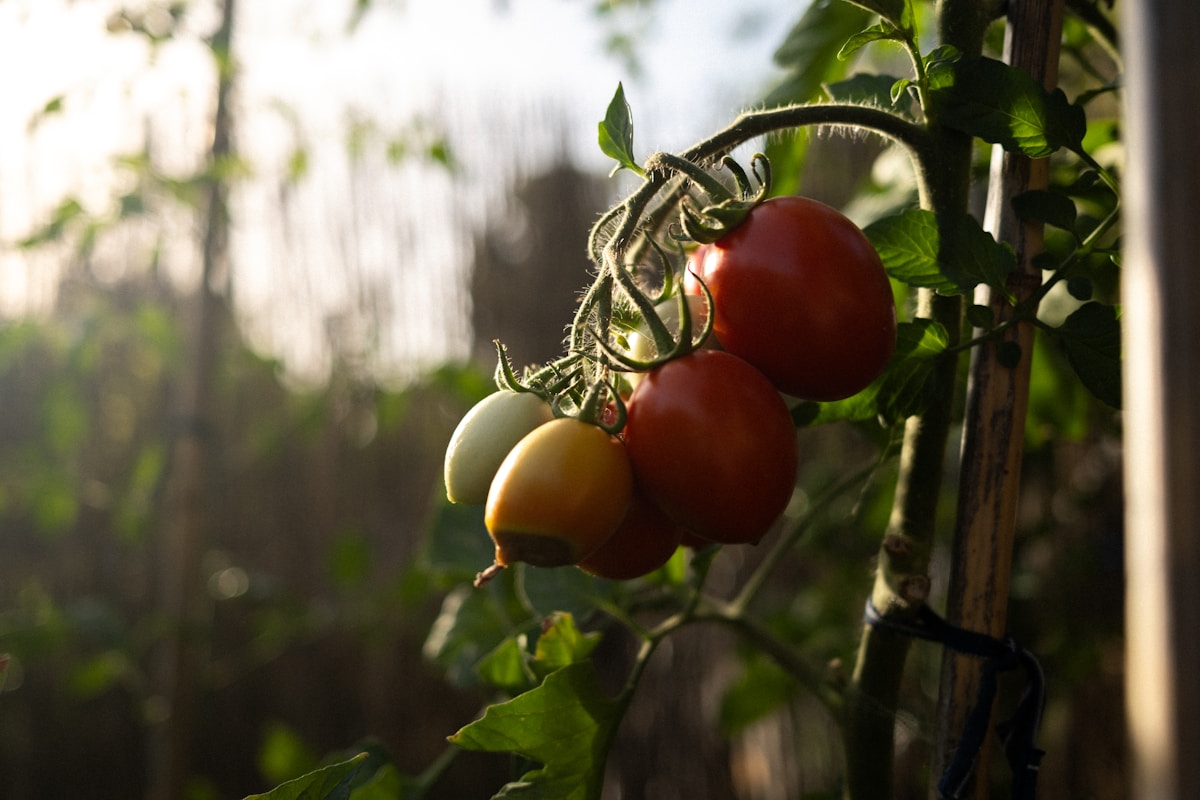
What Changes When Tomatoes Are Determinate vs Indeterminate?
The single biggest pruning mistake is ignoring the label on the transplant. Determinate tomatoes grow to a set size, then finish by producing a terminal flower cluster, so every major stem you remove can take a real share of the total crop with it. Indeterminate tomatoes keep extending and setting flowers until frost, which makes them much more forgiving candidates for sucker control, single-stem training, and repeated cleanup through the season.
That distinction is why Wisconsin says to prune indeterminate tomatoes only, while the UNH fact sheet takes a slightly broader view and explains how the pruning system should match the growth habit of the variety. In practical backyard terms, both sources point to the same decision rule: indeterminate tomatoes are managed for season-long balance, but determinate tomatoes are managed for canopy health first and yield protection second.
Gardeners often assume this difference is only about plant height, but fruit timing matters just as much. A determinate tomato compresses bloom, set, and ripening into a shorter window, so aggressive thinning can remove a large fraction of what that plant will ever produce. An indeterminate plant has more time to replace lost opportunities, which is why a clean one- or two-leader framework usually pays back through easier harvest and lower disease pressure later in the season.
| Plant Type | How It Grows | Best Pruning Style | Main Risk if You Overdo It |
|---|---|---|---|
| Determinate | Stops after setting terminal flower clusters | Light cleanup only, with minimal sucker removal | You cut off future fruit clusters and shrink total yield |
| Indeterminate | Continues growing and flowering until frost | One leader or two leaders with regular sucker control | You can expose fruit to sunscald if canopy gets too thin |
| Dwarf or patio types | Compact habit with short internodes | Mostly sanitation and support cleanup | Small plants stall if too much leaf area is removed |
| Container indeterminate | Vigorous but root volume is limited | Tighter stem control plus steady tying | Overpruning compounds heat and water stress |
This is also why pruning decisions should be coordinated with support plans from the start. If you are growing in fabric bags or patio containers, the volume and moisture swings discussed in how to grow tomatoes in pots matter more after pruning, because every leaf you remove changes how much the root zone has to cool and feed.
Should You Prune Tomato Suckers or Leave Them Alone?
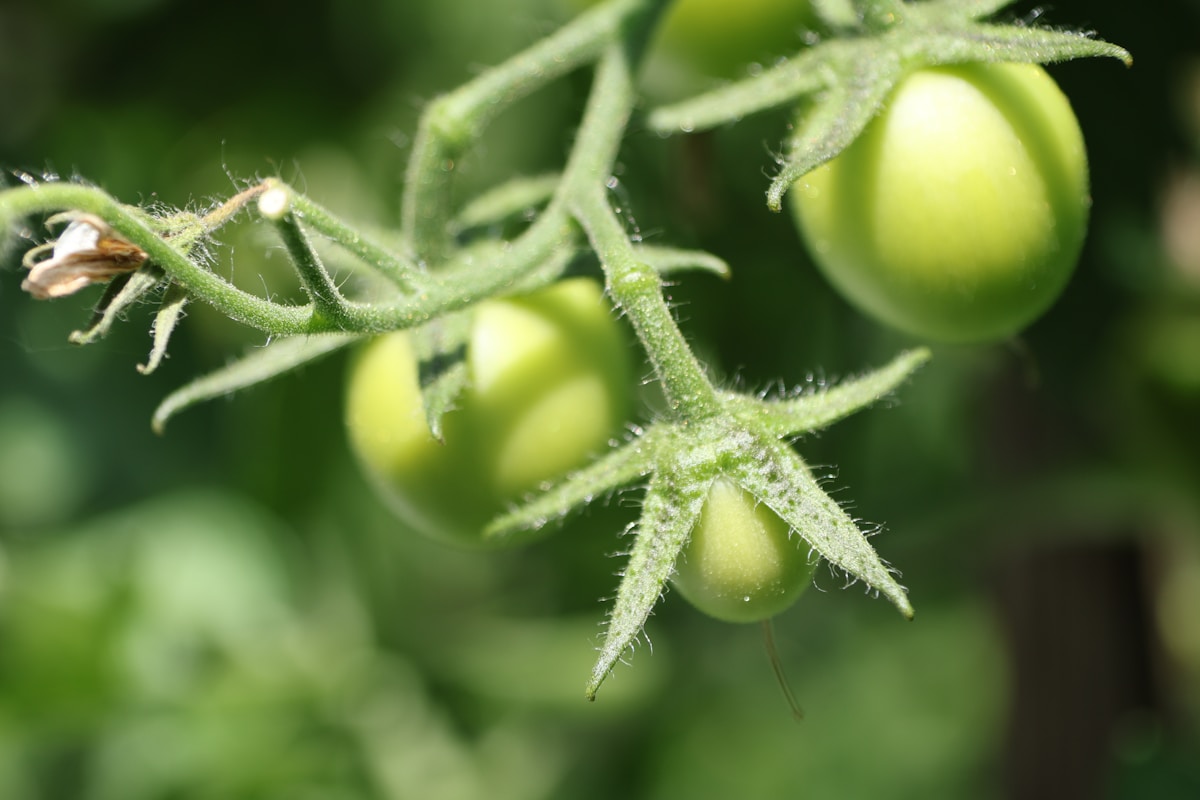
A tomato sucker is the shoot that grows from the junction between a main stem and a leaf. Left alone, that sucker becomes another fruiting stem. That is useful when you want more canopy or a second leader, but it becomes a problem when the plant is already dense and the support system cannot keep up. The real question is not whether suckers are bad. The question is whether each sucker improves the plant structure you are trying to maintain.
UNH recommends one leader most often, or two leaders if you intentionally keep the sucker below the first flower cluster and remove the rest while they are still less than 2 inches long. That advice is more specific than generic “prune the suckers” blog guidance because it ties the cut to a trellising outcome. A single leader speeds airflow and simplifies tying. Two leaders preserve a bit more leaf cover and can raise total fruit count without letting the plant become a tangled cage of competing stems.
There is also a timing reason to prune suckers early. Small suckers can be pinched off cleanly with fingers, while larger shoots leave bigger wounds and force the plant to redirect more energy after the fact. The later you wait, the more likely you are not really “pruning a sucker” anymore but removing a fully functioning branch that already built leaves, flower trusses, and shade.
When it makes sense to keep a sucker
Keep a sucker when you are deliberately building a second leader on an indeterminate plant, when one side of the canopy needs balance on a stake or trellis, or when the plant is in a dry, high-sun site where a slightly fuller canopy helps shade fruit. Leave it alone on determinate tomatoes unless the site is so crowded that airflow is clearly worse than the yield penalty you would cause by removing stems.
When it makes sense to remove a sucker
Remove suckers when they are turning a simple tied vine into a mass of crossing growth, when leaves stay wet deep in the canopy, when fruit is hidden from inspection, or when you need the plant to stay within a support system. This is the same logic behind tomato hornworm control: a canopy you can see into is a canopy you can scout, tie, and dry out faster after dew or rain.
When Should You Prune Tomato Plants?
Pruning starts once the plant is actively growing and the first flower cluster is easy to identify, not the day you transplant. Wisconsin recommends starting in late June or early July once early flowers are visible, then repeating every 10 to 14 days as needed. The calendar matters less than the plant stage, but the principle is useful: prune once the structure is obvious enough that you know which stem you are preserving and which one is stealing space.
Just as important, prune when foliage is dry. Dry-weather pruning reduces the chance of smearing disease organisms from one wound to the next and lets cuts seal faster. Wisconsin explicitly advises against casually using pruners that can spread disease, while hand-pinching small shoots avoids a metal tool entirely. If you do need a tool for thicker growth, disinfect it between cuts or between plants.
There is a seasonal endpoint too. Wisconsin advises stopping one to two weeks before expected first harvest so the plant can maintain enough canopy to protect fruit from sunscald. That detail is easy to miss, but it prevents a common late-season mistake: stripping leaves to chase quicker ripening, then discovering that exposed fruit turns pale, tough, and heat-stressed instead.
Practical rule: make small, frequent cuts on dry plants. Large corrective pruning sessions usually mean you waited too long or planted a support system that is too weak for the variety.
How Do You Prune Indeterminate Tomatoes Step by Step?
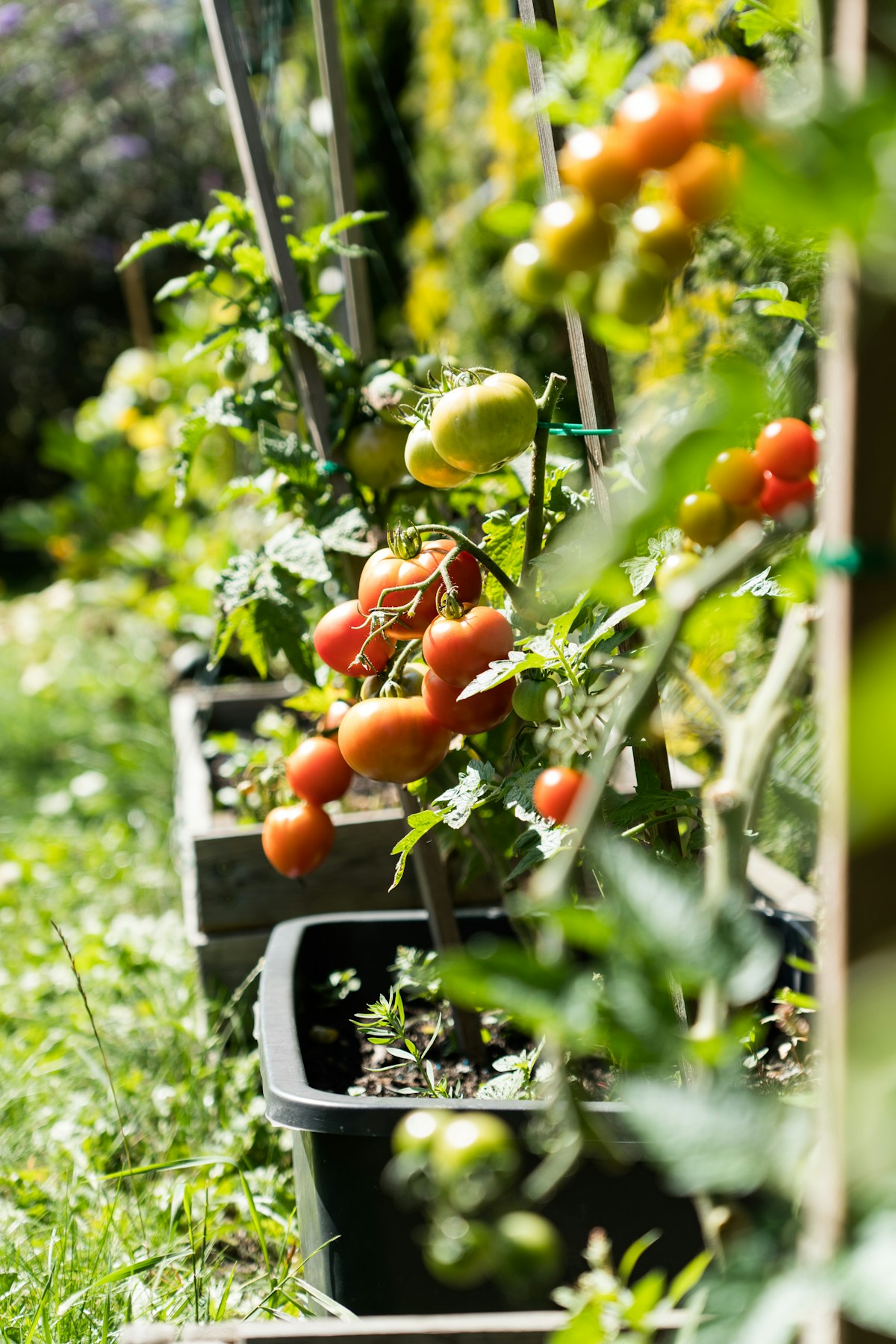
Indeterminate vines are where tomato pruning has the clearest payoff. These plants keep extending and setting new fruit, so every pruning pass is really a training pass that decides where future growth will go. The best backyard system is usually one main stem or two leaders tied to a stake, string, or sturdy cage. The more defined the support, the easier it is to tell which growth is productive and which growth is just filling space.
1. Choose one leader or two leaders early
Pick the main stem first. If you want two leaders, keep the sucker immediately below the first flower cluster and remove the rest. That matches the UNH system and gives you a predictable frame before the plant becomes dense. Do not wait until three or four suckers have already elongated, because by then you are not making a clean structural decision anymore.
2. Remove small suckers before they become branches
Pinch suckers when they are still short and flexible. Small cuts heal quickly and do not shock the plant. If the sucker is already thick and flowering, ask whether removing it now actually improves the structure more than it reduces leaf cover and fruit count.
3. Tie or clip the stem as you prune
UNH notes that clips are often spaced every 12 to 18 inches along the vine. That is a good homeowner benchmark because it reminds you that pruning and support should happen together. A plant that is pruned but not tied simply falls into the same crowded mass with fewer leaves.
4. Clean the lower canopy once fruit sets
Once the lowest fruit clusters are established, begin removing the most crowded lower leaves so the base of the plant dries faster and no foliage drags near the soil. This step is less about fruit size than about airflow and disease prevention.
5. Reassess every 10 to 14 days
The right system is dynamic. Early in the season you are choosing leaders. Midseason you are preserving airflow and keeping fruit accessible. Late season you are protecting fruit from sun and trying not to restart vegetative chaos with missed suckers. A quick walk-through every week or two is far safer than one severe cleanup once the cage is out of control.
| Stage | Main Job | What to Remove | What to Preserve |
|---|---|---|---|
| Early flowering | Set plant structure | Extra suckers beyond the chosen leaders | Main stem, first fruit cluster, planned second leader |
| Early fruit set | Control density | Small interior suckers and crowded basal leaves | Leaf cover above fruit and strong tied stems |
| Peak summer growth | Maintain access and airflow | New suckers, diseased leaves, low shaded growth | Enough canopy to shade fruit during heat |
| Pre-harvest stretch | Protect ripening fruit | Only problem leaves and truly crowded shoots | Fruit shade, support points, productive trusses |
If an indeterminate tomato keeps growing faster than you can manage, the answer is often stronger support and more consistent inspections, not harsher cuts. That is especially true after transplanting, where a plant that went through the staged acclimation in how to harden off seedlings can take off quickly once roots settle in.
How Do You Prune Determinate Tomatoes Without Cutting Yield?
Determinate tomatoes should be pruned with restraint. Because they stop after reaching a set height and carry a shorter, more concentrated production window, each vigorous stem matters more. Many gardeners hurt their total harvest by applying indeterminate habits to determinate plants and removing potential fruit sites that would have ripened just fine with a little support and airflow management.
The better approach is targeted sanitation: remove damaged or diseased leaves, lift the bottom foliage away from the soil line once fruit sets, and thin only the growth that is obviously trapped or rubbing. If you need to remove a few small suckers below the first flower cluster to improve spacing or support, keep it minimal. Once you start carving determinates into one-leader plants, you are often trading away fruit count without gaining enough ripening speed to justify it.
Missouri Extension adds a useful caution here from a different angle: training and pruning can increase blossom end rot risk, and root damage near the plant also restricts water uptake. That matters because heavy pruning shifts the plant’s balance at the same time summer heat is increasing water demand. On compact paste tomatoes especially, aggressive cleanup can leave fruit exposed and roots struggling just as fruit load peaks.
Prune determinate tomatoes to solve a specific airflow or sanitation problem, not because a perfect-looking framework is required for good harvests.
Should You Remove Lower Leaves on Tomato Plants?
Yes, lower-leaf cleanup is usually the safest pruning move for both growth habits, provided you do it gradually. UNH recommends maintaining good airflow by removing lower leaves and keeping the leaf just below the lowest fruit cluster plus the leaves above that. Wisconsin makes the same disease-management point from another angle: the bottommost leaves are often the first place where humidity lingers and splash-borne disease begins.
The reason this works is simple. Soil is the source of splash, lower canopies are the slowest area to dry, and dense leaves near the base block air exactly where the plant needs it most after rain or irrigation. Removing the worst of that congestion helps even if you do not touch a single upper sucker. It is a higher-return move than random thinning in the middle of the canopy.
How much lower foliage should you remove?
Work upward in stages instead of stripping the bottom foot all at once. Remove leaves that are yellowing, touching soil, or crowding the lowest truss. After fruit is well established higher up, you can continue tidying the base as long as the plant still has enough active foliage to shade fruit and support sugar production. If the site is brutally sunny, keep more leaf cover on the southwest or hottest side of the plant.
Airflow also depends on spacing and support, not just pruning. Penn State’s staking guidance recommends keeping plants 18 to 24 inches apart in rows when using a stake system, which is a reminder that even smart pruning cannot fully rescue tomatoes that are planted too close for the support method.
What Pruning Mistakes Reduce Yield or Increase Disease Risk?
The first mistake is overpruning in the name of order. Too little leaf area means less sugar production, less fruit shade, and more stress during heat. That can show up as sunscald, stalled growth, or the uneven moisture dynamics that feed fruit problems like blossom end rot. A plant should look open enough to dry and inspect, not skeletal.
The second mistake is pruning wet foliage or using dirty tools. Every cut is a wound, and every wound is an opportunity to move pathogens if you work through a wet patch quickly. Hand-pinching small suckers on a dry afternoon is safer than clipping through a humid jungle after rain.
The third mistake is separating pruning from the rest of plant management. If a plant is falling over, packed in a weak cage, under-watered, or short on mulch, pruning alone will not fix the system. In fact, it may expose how weak the rest of the system is. That is why even-moisture guidance from UNH’s tomato growing fact sheet and the irrigation logic in how to build a wicking bed or drip irrigation versus soaker hose matter more after pruning than before it.
| Mistake | What Happens | Better Fix |
|---|---|---|
| Pruning all tomatoes like indeterminates | Determinate plants lose fruiting stems and total yield | Match the pruning style to the variety label |
| Removing too many leaves in hot weather | Fruit scalds and plants stress faster | Keep enough canopy to shade clusters |
| Ignoring support while pruning | Vines still collapse into crowded growth | Tie or clip stems during every pruning pass |
| Waiting until suckers are thick branches | Large wounds and bigger production tradeoffs | Pinch small suckers early and regularly |
| Pruning wet plants | Disease is easier to spread through wounds | Work on dry foliage and clean tools |
The fastest self-check is this: after pruning, can you still see healthy leaf cover around fruit, can you follow the main stems easily to their supports, and can the base of the plant dry quickly after water hits the ground? If yes, the cuts were probably useful. If the plant looks exposed, raw, or suddenly harder to manage, the session was probably too aggressive.
FAQ: How to Prune Tomato Plants
Should you prune tomato suckers?
You should prune tomato suckers on indeterminate tomatoes when you are training plants to one or two leaders, but determinate tomatoes are usually pruned lightly or not at all. The goal is better airflow and easier support, not stripping the plant down to bare stems. If a sucker helps build a planned second leader, keep it; if it only creates crowding, remove it early.
When should you prune tomato plants?
Start once the first flower cluster is visible and the plant is actively growing, then repeat on a regular inspection schedule through the season. Prune when foliage is dry so cuts heal faster and disease is less likely to spread. Small, frequent passes are usually safer than one heavy cleanup.
How do you prune determinate tomatoes?
Prune determinate tomatoes conservatively by removing only damaged leaves, crowded lower foliage, or a few small suckers below the first flower cluster if airflow is poor. Heavy pruning can reduce the total crop because determinate plants stop growing after they set terminal flower clusters. Think sanitation first, structure second.
How many stems should an indeterminate tomato have?
Most home gardeners do best with one main stem or two leaders on indeterminate tomatoes, depending on how strong the support system is and how much foliage cover the site needs. More stems can increase shading and disease pressure, while too few leaves can expose fruit to sunscald. Choose the structure early so later pruning stays simple.
Should you remove lower leaves on tomato plants?
Yes, removing lower leaves can improve airflow and reduce soil splash onto foliage, especially after fruit starts forming higher on the plant. Leave enough healthy canopy above the fruit clusters so the plant still shades fruit and keeps production steady. Lower-leaf cleanup is usually the safest place to start if you are unsure how hard to prune.