
Tomato Hornworm Control for Faster Scouting and Lower Tomato Damage
Tomato hornworm control works best when you scout for fresh frass and stripped upper leaves, remove active caterpillars by hand, and use Bt only on small larvae you cannot stay ahead of manually. The key biological-control decision is simple: hornworms covered with white braconid cocoons should stay on the plant because they have stopped feeding effectively and will help suppress the next generation.
Tomato hornworm control starts with scouting discipline, because tomato hornworms can strip useful leaf area quickly once they reach the last larval stage and hornworm damage on tomatoes is often obvious only after the plant already looks thinned out. If you already use our guides on how to grow tomatoes from seed, growing tomatoes in pots, and tomato transplant timing, this page picks up at the next failure point: what to do when a healthy plant suddenly starts losing top growth in midsummer.
That makes this article different from a generic bug profile. The goal here is not to tell you hornworms exist. The goal is to give you an evidence-based action plan for identifying the caterpillar, deciding whether it needs to come off the plant immediately, and reducing repeat pressure without overusing disruptive sprays.
What Does Effective Tomato Hornworm Control Start With?
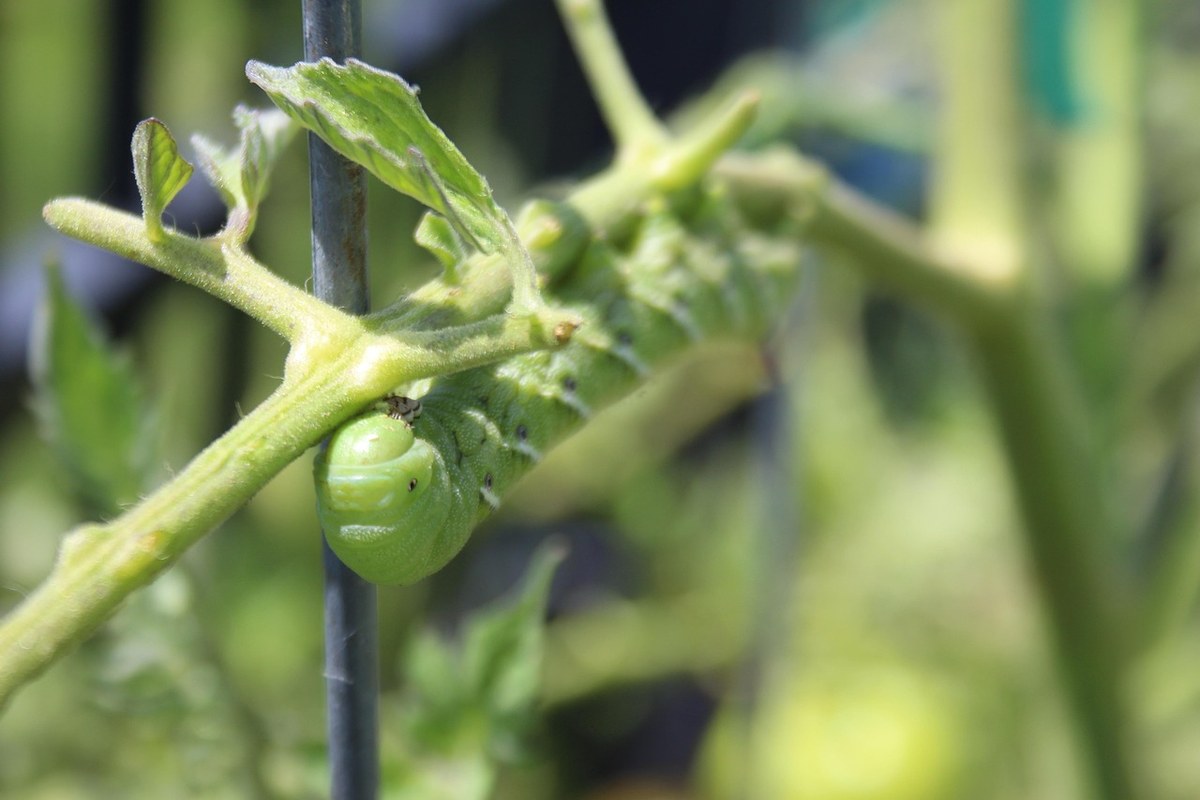
Effective control starts with a good threshold, not with a bottle. University of Maryland Extension notes that feeding often begins high in the tomato canopy and frequently goes unnoticed until the final caterpillar stage, when roughly 90% of defoliation occurs. That one detail changes the workflow. If you wait until the whole plant looks ragged, you are already responding late. The practical trigger is earlier: fresh dark droppings, clipped upper foliage, or fruit gouges that appear suddenly on a plant that looked fine two days earlier.
University of Minnesota Extension and Utah State University Extension both frame hornworms as a pest that is usually manageable with careful monitoring rather than routine whole-garden spraying. That matches home-garden reality. A single late larva can remove a surprising amount of tissue, but infestations are typically concentrated on a handful of plants. In other words, tomato caterpillar control is more like spot firefighting than full-field treatment.
| Signal | What It Usually Means | Best Immediate Move | Do Not Do This |
|---|---|---|---|
| Fresh dark frass on lower leaves or mulch | A large caterpillar is feeding directly above | Inspect the upper canopy and stem joints right away | Assume deer or drought caused the problem |
| Leaves missing from the top third of the plant | Late-stage feeding is already underway | Check the tallest stems first at dusk or dawn | Delay scouting until the weekend |
| Large gouges in green fruit | One or more older larvae are feeding beyond foliage | Remove active larvae and check nearby plants | Treat the entire garden on a guess |
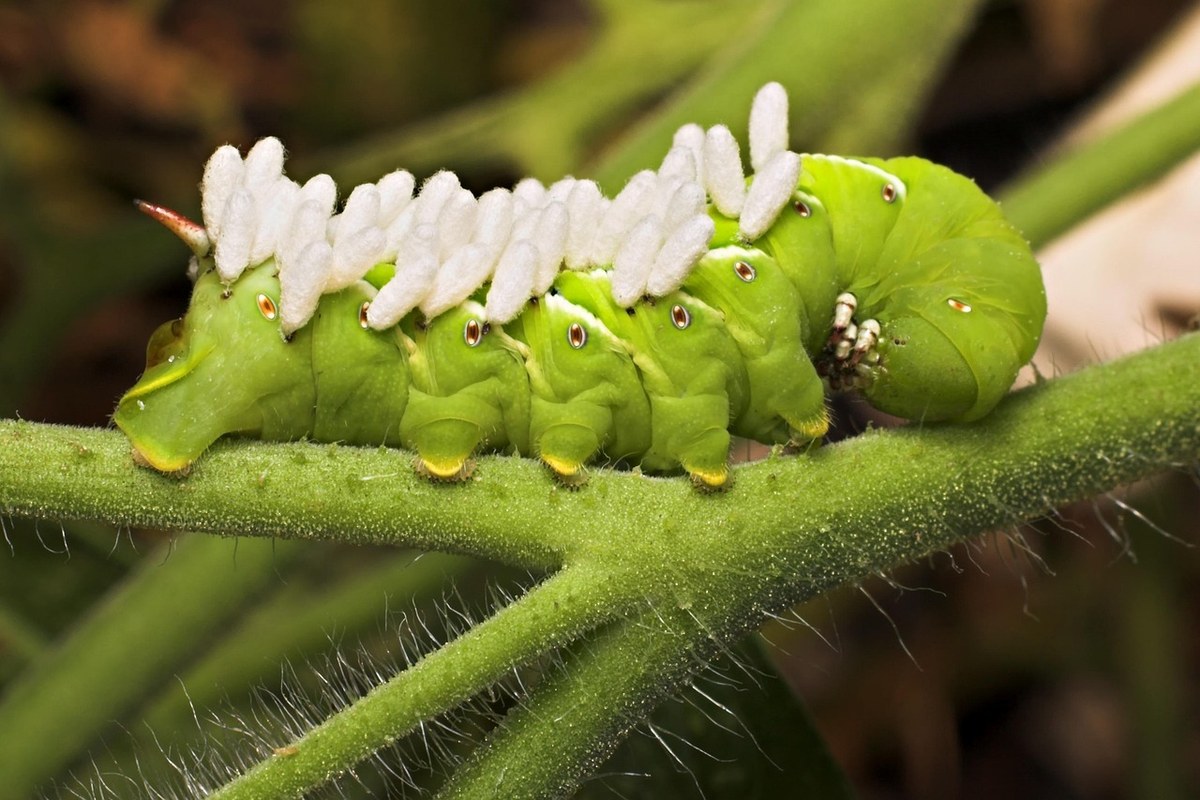
| White rice-like cocoons on a hornworm | Beneficial braconid wasps have parasitized it | Leave that caterpillar in place | Kill it and remove the wasp cocoons |
| Small larvae plus repeated new feeding | Egg hatch is still active | Consider a labeled Bt spot treatment on affected plants | Rely on Bt to clean up giant caterpillars |
This is also why broad statements like "just companion plant" are not enough. Our companion planting chart for vegetables can support habitat diversity and scouting access, but it does not replace regular checks once hornworm signs show up.
How Do You Tell Tomato Hornworms From Tobacco Hornworms?
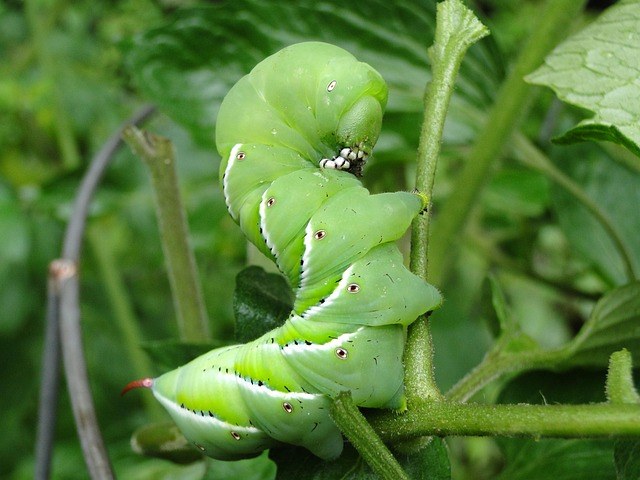
Home gardeners often call both species tomato hornworms, but the distinction is useful because it improves identification confidence and prevents overreacting to the wrong insect. Maryland, Utah State, and UC IPM all describe the same basic split: tomato hornworms show eight white V-shaped or chevron-like marks on each side and a dark horn, while tobacco hornworms show seven diagonal stripes and a red horn. Both species feed on tomatoes and other solanaceous crops, so the control steps are similar, but knowing the pattern keeps scouting accurate.
The adult stage matters too because it explains why outbreaks can seem sudden. UC IPM notes that the adult moth is a strong flier and that larval pressure typically builds into midsummer, with a possible later-summer bump. Maryland Extension adds that adult moth activity starts as early as May in some regions and can extend into early August. That means tomato hornworm signs are seasonal, but not tied to one exact week everywhere. Gardeners need a recurring scouting habit, not a single calendar reminder.
| Feature | Tomato Hornworm | Tobacco Hornworm | Why Gardeners Care |
|---|---|---|---|
| Side markings | Eight white V-shaped marks | Seven diagonal white stripes | Fastest visual ID cue on a live larva |
| Horn color | Dark to black | Red to reddish-orange | Useful second check when stripes are hard to see |
| Common hosts | Tomato, pepper, potato, eggplant | Tomato, tobacco, pepper, potato, eggplant | Both can show up in the same vegetable zone |
| Adult form | Five-spotted hawkmoth | Carolina sphinx moth | Explains evening egg-laying and repeat generations |
| Control workflow | Scout, hand-pick, preserve beneficials | Scout, hand-pick, preserve beneficials | Management is nearly identical in home gardens |
In practical terms, you do not need to win a taxonomy contest to protect a tomato plant. You need to confirm that the caterpillar is a hornworm, check whether beneficial wasps already found it, and respond before it turns one damaged stem into a canopy problem.
What Does Tomato Hornworm Damage Look Like, and Where Should You Scout First?
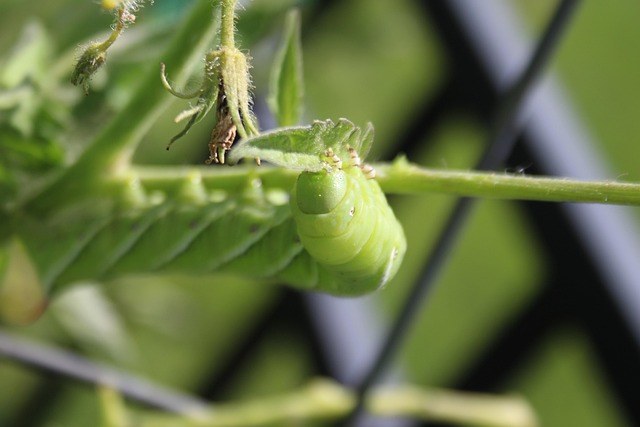
Most gardeners do not find the caterpillar first. They find the evidence first. Maryland Extension says feeding ordinarily begins at the top of the plant, and large caterpillars often consume whole leaves instead of leaving small holes. It also notes that dark blocky droppings, or frass, on leaves and soil below are one of the most reliable scouting clues. The bigger the frass, the more mature the caterpillar. That makes frass one of the highest-value secondary keywords in practice because it gets you to the worm faster than staring randomly into a green canopy.
Fruit symptoms look different from typical chewing by smaller pests. UC IPM describes hornworm feeding as large, deep cavities, which is a better mental picture than "holes." If you see a gouged green tomato paired with stripped leaves and pellets below, you are almost certainly looking at hornworm damage on tomatoes rather than flea beetles, blight, or rabbit browse.
Best scouting pattern for a real backyard tomato bed
- Start with the plant that has the freshest missing top growth, not the one with the oldest yellow leaves.
- Check lower leaves and mulch for frass before you search for the caterpillar itself.
- Follow the stem upward because the worm is usually directly above the newest droppings.
- Inspect inside the cage or trellis, not just the outer foliage wall.
- Repeat at dusk or dawn if midday light makes the larva disappear into the canopy.
Useful scouting trick from extension guidance: Maryland recommends spraying water on the canopy to agitate hornworms and make them easier to spot as they move. This is not a control method by itself, but it is a fast way to confirm which plant is actively infested.
| Clue | Hornworm Pattern | Often Mistaken For | Next Check |
|---|---|---|---|
| Leaf loss | Whole sections missing, sometimes down to the midrib | Heat stress or general wilt | Look above for frass and stem stripping |
| Fruit damage | Large gouges in green or ripening fruit | Bird pecks or general chew damage | Search nearby interior stems for a large larva |
| Plant location | Top or interior canopy first | Deer or rabbit browse | Compare outer canopy versus interior feeding |
| Debris below plant | Dark pellet-like frass directly below feeding site | Soil splash or mulch bits | Touch-test pellets and inspect the stem above |
| Speed of change | Plant looks dramatically worse in 24 to 48 hours | Slow nutrient or disease decline | Scout immediately, not after the next watering cycle |
If your tomatoes are container-grown, pair this workflow with our pot-specific guidance in how to grow tomatoes in pots. Container plants are easier to inspect thoroughly, which means daily checks can catch hornworms before fruit scarring starts.
Should You Kill Every Hornworm You Find?
No, and this is the decision that separates useful IPM from reflexive pest panic. Maryland Extension is explicit: hornworms carrying white rice-like cocoons are parasitized by braconid wasps, and those caterpillars should be left in place so the wasps can complete their life cycle. The site also notes that a parasitized hornworm stops eating and eventually dies. Utah State similarly describes the white projections as visible evidence of parasitoid activity. For home gardeners, that means the most aggressive-looking caterpillar in the patch may already be part of the biological control you want working for you.
Everything else, though, should come off if it is actively feeding. The standard extension recommendation is still hand-picking into soapy water, especially because large larvae are easiest to see near dusk and dawn. That advice sounds basic, but it keeps matching university IPM guidance for a reason: one large hornworm is physically removable, and removing it is immediate control, not delayed control. In small gardens, that speed matters more than theoretical completeness.
The right question is not "Is this bug scary?" The right question is "Is it still feeding, or has beneficial control already taken over?"
When hand removal is the best answer
Hand removal is best when the caterpillar is large, the infestation is limited to one or two plants, or fruit is already being fed upon. Maryland notes that the feet on large larvae grip strongly, so pulling them off may take a little force. Gloves are fine, but the bigger time saver is to bring a container of soapy water to the plant so the job is finished in one pass instead of relocating the worm and needing to hunt it again.
There is also a timing benefit. UC IPM says infestations are usually spotty and recommends spot treatment rather than blanket treatment where damage is found. In a home garden, hand-picking is the ultimate spot treatment. You remove the exact organism causing the problem and do not hit nearby flowers, predatory insects, or unaffected plants in the process.
Which Prevention Steps Actually Reduce the Next Wave?
Prevention is not about pretending hornworms will never show up. It is about making the next scouting round smaller and faster. Utah State recommends crop rotation away from solanaceous hosts where populations were high, and it also notes that turning soil after harvest can expose pupae to winter conditions. UC IPM likewise points to crop rotation and post-harvest soil disturbance as ways to reduce carryover. Those are unglamorous moves, but they target the overwintering stage instead of waiting for another midsummer surprise.
During the season, the highest-value prevention step is preserving the natural enemies already doing work. UC IPM warns against disruptive pesticides when natural enemies are active, especially early. That lines up with Maryland's guidance to preserve braconid wasps when you see cocoon-covered hornworms. In practice, this means every unnecessary broad spray can buy you a short-term emotional win while making later scouting worse.
Physical plant management helps too. A pruned, supported plant is easier to inspect than a sprawling, collapsed one. That is another reason the site keeps emphasizing structure in tomato culture. Caged or staked plants are not just cleaner. They make pest scouting possible before the final instar does the real canopy loss. If you are still planning your season, our seed starting calendar by zone and mulch and evaporation guide help build beds that are easier to inspect and maintain when hornworm season arrives.
| Timing | Most Useful Move | Why It Helps | Common Mistake |
|---|---|---|---|
| Preseason | Rotate tomatoes away from last year's heavy hornworm zone | Reduces immediate access to the same host area | Planting all solanaceous crops in one repeated block |
| Transplant stage | Install supports and preserve access lanes | Makes later scouting much faster | Letting plants sprawl before cages go on |
| Early growth | Check upper leaves weekly for eggs and light feeding | Catches larvae before major defoliation | Waiting until whole leaves disappear |
| Peak summer | Protect beneficial insects and use spot responses | Keeps biological control active | Blanket spraying for a single infested plant |
| Post-harvest | Remove residue and disturb soil where practical | Targets overwintering pupae | Leaving infested crop debris untouched until spring |
Companion planting can still support this system, just not as a magic shield. Use flowers and mixed plantings to improve beneficial habitat and visual diversity, but keep your actual prevention plan grounded in scouting, rotation, and preserving parasitoids.
When Does Bt Make Sense, and What Should You Avoid?
Bt, or Bacillus thuringiensis, makes sense when you are dealing with small larvae and repeated hatch on a limited number of plants. Utah State says hornworms should be treated only when they cause extensive defoliation or feed on fruit, and it emphasizes targeting eggs and young larvae because they are easier to kill. UC IPM likewise lists Bt among organically acceptable methods, but its guidance is built around preserving natural enemies and spot-treating affected sections rather than defaulting to whole-area pesticide use.
That nuance matters. Gardeners often reach for control products only after a caterpillar is already enormous. At that point, the simplest answer is usually manual removal, not delayed mortality. Bt is most useful when your scouting shows a second wave of small larvae you are not going to keep ahead of by hand over the next several days. Good foliage coverage matters because the caterpillar has to eat treated tissue.
The other thing to avoid is escalating from one missed scout to a harsh, broad-spectrum response. UC IPM explicitly connects low-disruption choices with conserving natural enemies. In the home landscape, that is the higher-value objective. Hornworms are dramatic, but they are also visible and localized compared with many smaller pests. A targeted response is usually enough.
| Situation | Best First Move | Why | What to Avoid |
|---|---|---|---|
| One or two large visible larvae | Hand-pick into soapy water | Immediate removal of the actual feeders | Spraying first and hoping they stop soon |
| Small larvae after new egg hatch | Bt on affected foliage | Most effective on young caterpillars | Treating only the soil or untreated nearby plants |
| Hornworm covered in white cocoons | Leave it alone | Beneficial wasps are already controlling it | Killing the caterpillar and the parasitoids together |
| Fruit feeding on one plant only | Remove larvae, inspect adjacent plants, spot treat if needed | Infestations are usually concentrated | Blanket treatment of the full garden |
| Late-season recurring problem | Tighten scouting and post-harvest cleanup | Targets the next generation rather than chasing symptoms | Assuming one spray fixes overwintering carryover |
If you are choosing where to spend time on prevention, prioritize tomato hornworm signs you can see over theoretical repellent tricks you cannot measure. Frass, missing leaves, fruit gouges, and beneficial cocoons give you a much better decision framework than folklore.
FAQ: Tomato Hornworm Control
What does tomato hornworm damage look like?
Tomato hornworm damage usually starts high in the canopy, where large caterpillars remove leaf tissue fast and leave dark, blocky droppings on leaves or on the ground below. As pressure rises, fruit can develop large gouges and stems can look stripped instead of lightly chewed. The speed of change is often the giveaway.
How do you find tomato hornworms before they strip a plant?
Start with fresh frass, missing upper leaves, and interior stems where foliage disappears in chunks, then inspect the plant from the top down at dusk or dawn. University extension guidance also recommends spraying water across the canopy because disturbed hornworms often shift position and become easier to spot. Search the stem directly above the newest droppings first.
Should you kill a hornworm with white cocoons on its back?
No. Those white rice-like cocoons belong to braconid wasps, which parasitize the hornworm, stop most further feeding, and help suppress the next generation of caterpillars. Leaving that hornworm in place protects the beneficial insects already working on your behalf.
Does Bt kill tomato hornworms?
Bt can work well on tomato hornworms, but it is most effective on small larvae and only after they eat treated foliage. It is a better fit for young caterpillars you cannot stay ahead of by hand than for huge late-stage worms already easy to remove manually. Good coverage on the affected plant matters more than spraying the whole garden.
When do tomato hornworms appear?
Adult hawkmoths begin emerging from overwintered pupae in late spring to early summer, with larval pressure usually building into midsummer and sometimes peaking again later in summer. The exact window shifts by region, so weekly scouting matters more than relying on a single calendar date. Warm areas may see earlier or longer activity windows than cooler northern sites.