
How to Use a Square Foot Gardening Spacing Chart Without Crowding Beds
A square foot gardening spacing chart is a fast planning tool for matching crop size to the right number of plants per square so raised beds stay productive instead of turning into a tangled canopy. The biggest yield gains usually come from being conservative with large crops like tomatoes, cucumbers, and squash while using higher-density squares for roots, greens, scallions, and herbs.
A square foot gardening spacing chart works best when you treat it as a starting layout for plants per square foot, not as a rule that every crop must fit into one identical box. In practice, the best square foot garden layout blends dense quick crops, wider heavy feeders, and a few strategic support plants so you get more harvest per bed without creating disease-prone congestion.
That distinction matters because charts are often copied without context. Seed packets, variety size, trellis use, and your local heat all change how aggressive a raised bed spacing chart can be. The goal is not to cram the maximum number of stems into a 4x4 raised bed plan. The goal is to keep light, airflow, root space, and harvest access in balance from the first sowing through the last cleanup.
Why Does a Square Foot Gardening Spacing Chart Work Better Than Standard Row Spacing?
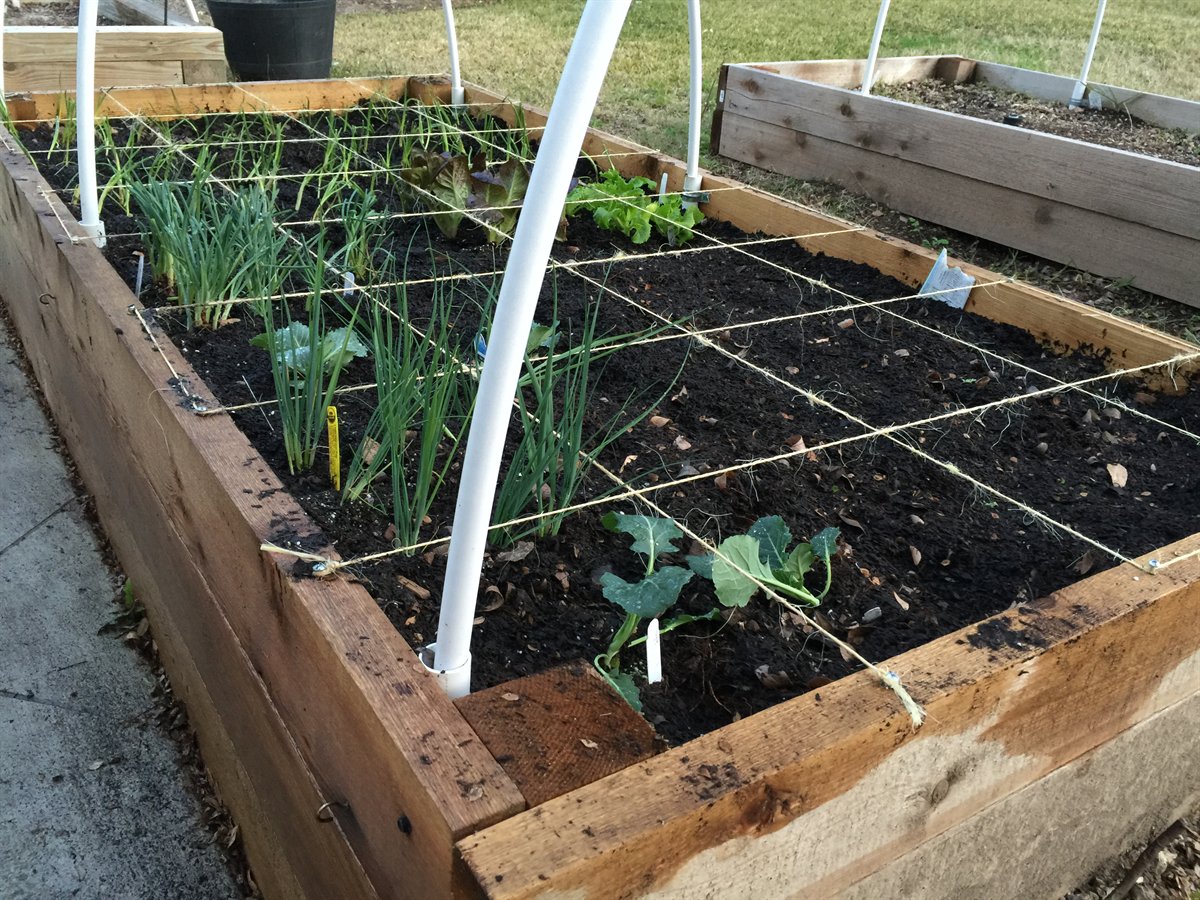
Standard row spacing assumes you are planting long in-ground rows with walking lanes between them. Square foot gardening removes those wasted lanes and shifts the planning question from "how far apart are the rows?" to "how much mature canopy can each square really support?" That is why the method feels so efficient in small backyards, side yards, and patio-adjacent raised beds.
The chart also simplifies bed math. If your bed is 4 feet wide and 8 feet long, you have 32 planning squares. That makes crop allocation easier: four squares for peppers, four for salad greens, two for basil, and the rest for roots or succession crops. Instead of approximating with a tape measure every time, you make a crop map once and adjust it by season.
Where gardeners go wrong is assuming dense planting automatically means better yield. Dense spacing raises humidity, speeds foliar disease spread, and hides irrigation problems. A good square foot gardening chart improves output only when it preserves the two conditions most homeowners skip: you can still see the soil surface, and you can still reach plants for pruning, scouting, and harvest.
Core rule: if a square looks full at transplant time, it is usually overfull by midsummer.
If your raised beds are still being built or refilled, pair the chart with a soil mix plan for raised garden beds so the root zone supports tight but healthy planting.
How Many Plants Per Square Foot Fit in a Typical Vegetable Bed?
The best way to use a square foot planting guide is to group crops by mature width. Narrow, quick crops can share a square because they stay upright, harvest early, or finish before neighboring plants need the room. Broad-leafed, vining, or high-maintenance crops deserve more space even when a chart online suggests you can push the limit.
Use the table below as a conservative starting point for a square foot gardening chart. It is intentionally less aggressive than many printable charts because most home beds now grow improved varieties, receive more fertility, and stay productive longer into warm weather. Conservative spacing lowers the risk of spending June untangling plants that looked manageable in April.
| Crop | Starting Count | Why It Works | Watchout |
|---|---|---|---|
| Carrots | 16 per square | Narrow tops and vertical root habit | Thin early so roots size evenly |
| Radishes | 16 per square | Fast turnover and short canopy | Harvest promptly or bulbs crowd each other |
| Scallions | 16 per square | Minimal leaf spread | Keep moisture even for straight stems |
| Beets | 9 per square | Medium canopy with moderate root size | Clusters from multigerm seed may need thinning |
| Spinach | 9 per square | Works well in cool-season windows | Bolts quickly in rising heat |
| Bush beans | 9 per square | Compact habit and short harvest reach | Do not combine with heavy shade from tall crops |
| Lettuce | 4 per square | Leaf forms expand but remain manageable | Cut-and-come-again types can still crowd neighbors |
| Basil | 4 per square | Prunes well and fits edge squares | Needs airflow beside tomatoes |
| Kale | 1 per square | Large mature leaf spread | Lower leaves block adjacent roots if underfed |
| Pepper | 1 per square | Compact upright structure when staked | Fruit load increases branch spread in midsummer |
Notice what is missing from the "high count" side of the table: tomatoes, zucchini, potatoes, and winter squash. Those are the crops that create the most disappointment when gardeners follow a chart literally and ignore mature size. The more a crop depends on pruning, staking, or sprawling, the less you should trust a one-square default.
Which Crops Need More Than One Square Foot?
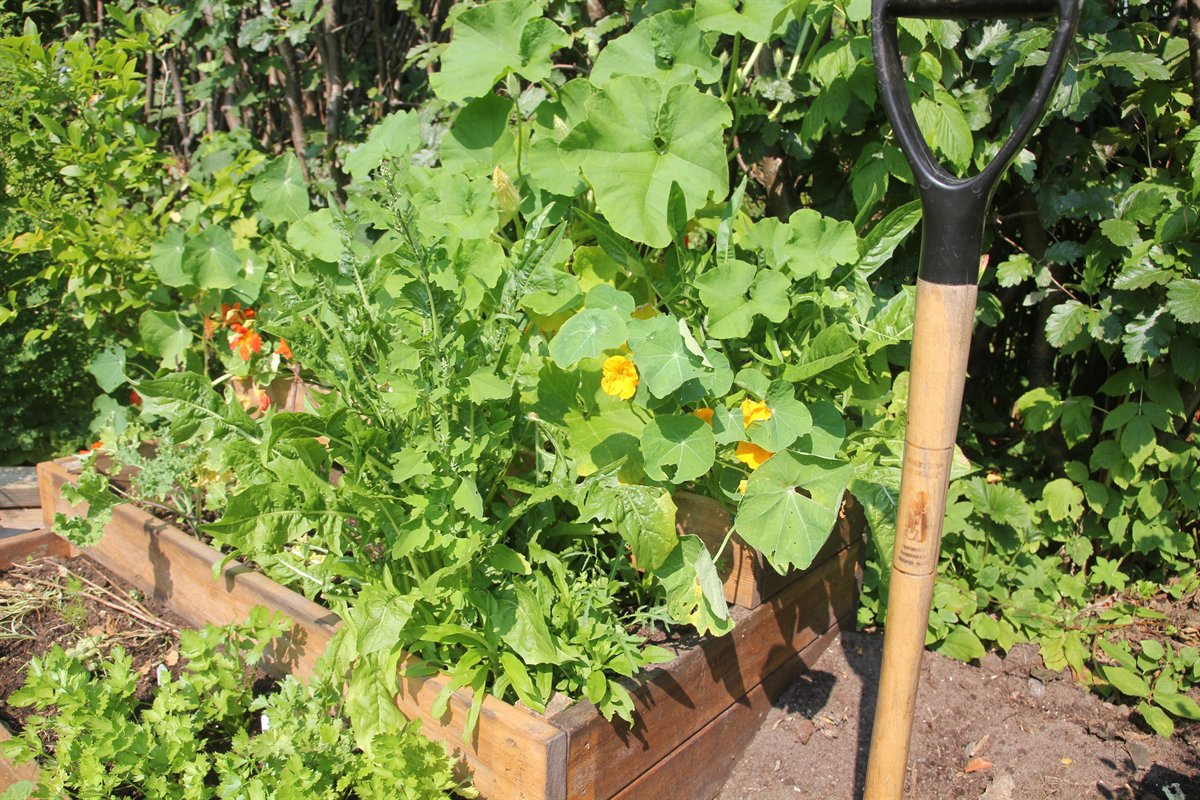
A square foot gardening spacing chart is most valuable when it tells you where to stop crowding. Large crops are not failures of the method. They just need a different interpretation. A tomato may live in a square-foot system, but it rarely lives in only one square foot of real garden space once you account for support, airflow, and harvest reach.
Large crops that usually need expanded spacing
| Crop | Practical Space | Why More Room Helps | Best Adjustment |
|---|---|---|---|
| Indeterminate tomato | 2 to 4 squares | Heavy canopy, frequent pruning, disease pressure | Train vertically and keep companion plants outside the root flare |
| Determinate tomato | 2 squares minimum | Shorter but still wide once loaded with fruit | Use sturdy cages and leave side access |
| Cucumber on trellis | 2 squares | Vines and harvest access need room | Place on north edge with a trellis |
| Zucchini | 4 squares | Broad leaf canopy shades neighboring crops fast | Give it a corner or separate bed |
| Potato | 4 squares | Bulking tubers compete heavily below ground | Grow in a dedicated block or container |
| Winter squash | 9 squares or more | Long vines overrun the grid quickly | Plant outside the main square-foot bed |
| Corn | Block planting, not isolated squares | Pollination needs grouped stands | Reserve a separate bed if you grow it at all |
This is where a square foot gardening tomatoes plan usually breaks down. Many gardeners see one tomato square on a printable chart and assume that is enough. In reality, even compact tomatoes expand sharply once you add mulch, support ties, irrigation tubing, and fruit clusters. If you want predictable harvests, follow the more generous spacing logic in our tomato spacing in raised beds guide and treat the grid as an organizational overlay rather than a permission slip to crowd the canopy.
The same principle applies to cucurbits and brassicas. If the mature plant will hide the grid by early summer, allocate extra squares up front. It is much easier to leave a square empty for later succession planting than to recover from mildew, broken stems, or inaccessible fruit because the plan was too tight.
How Do You Build a 4x4 Square Foot Garden Layout That Stays Productive All Season?
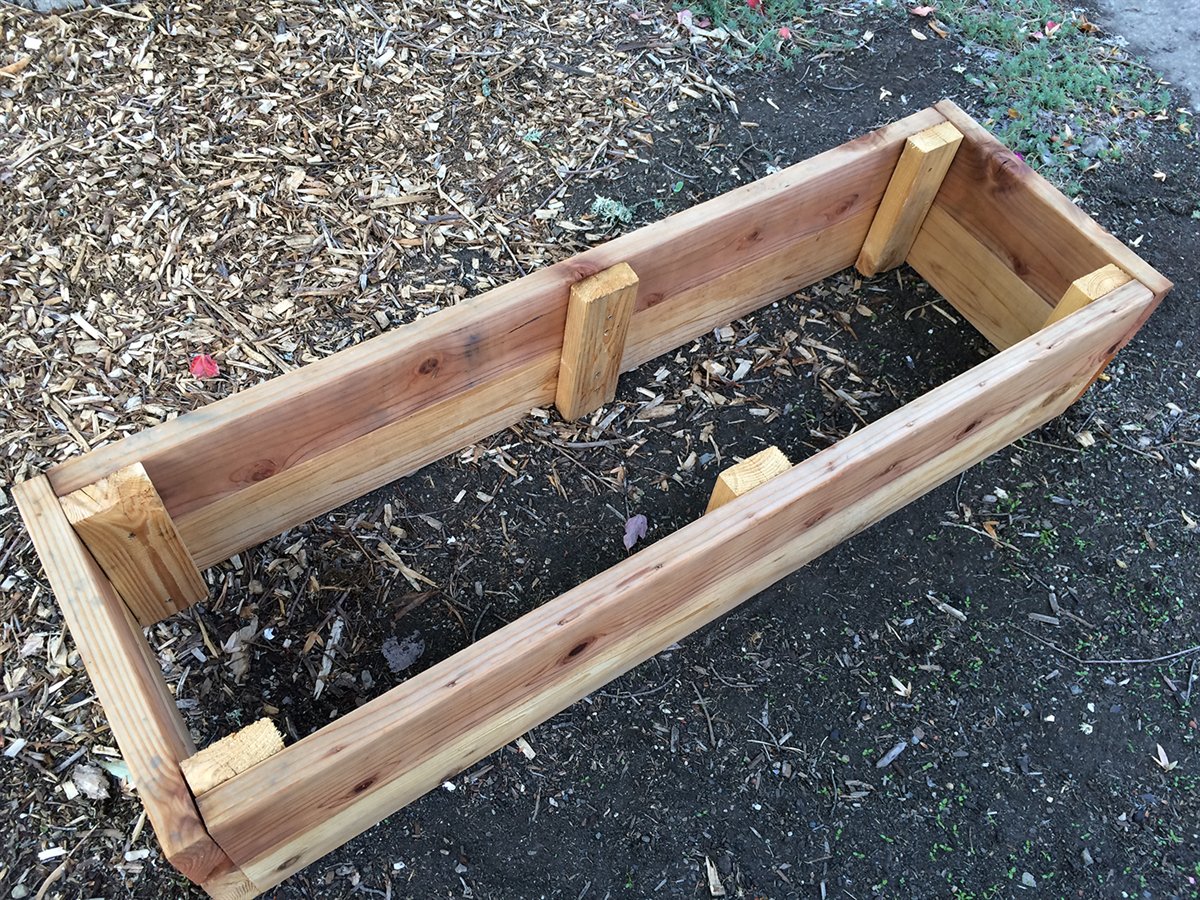
A 4x4 raised bed plan is where the chart becomes useful instead of theoretical. Start by putting tall crops on the north side in most US gardens so they do not shade the rest of the bed. Then assign the south and east edges to quick crops or low herbs that can be harvested often without stepping over major stems. This approach keeps the most maintenance-heavy crops close to your access points.
A practical 16-square example
- 4 north-edge squares: 2 trellised cucumbers and 2 basil squares below the support line.
- 4 center-left squares: 2 peppers and 2 lettuce squares for early harvest turnover.
- 4 center-right squares: 9 beets plus 9 spinach in spring, then basil or bush beans after harvest.
- 4 south-edge squares: carrots, scallions, and radishes for high-density quick succession.
That mix works because the bed is not trying to solve every planting desire at once. The large crops are limited. The dense crops are short-cycle. The herbs sit where they can be cut repeatedly without disturbing roots around them. Most grid layouts fail because they blend too many large crops with too many companion flowers in the same 16 squares, leaving no place for the garden to expand naturally.
Bed dimensions matter too. Oregon State and other extension programs consistently recommend keeping raised beds narrow enough to reach the center from either side, which usually means about 4 feet wide. That single design choice protects soil structure because you do not need to step into the bed, and it keeps square allocation honest because every square remains accessible.
Before you fill a layout with seedlings, cross-check your transplant timing with a seed starting calendar by zone and with a hardening off schedule for seedlings. A clean spacing chart still underperforms if transplants go in too early, stall, and occupy space without growing.
When Should You Reuse Squares for Succession Planting?
Succession planting is where square foot gardening earns its reputation for efficiency. A chart does not just tell you how many plants fit right now. It helps you reserve future space. Radishes, spinach, baby lettuce, and scallions are excellent early square occupants because they leave quickly and free room for warm-season crops or second sowings.
The simplest system is to label each square with one of three roles: early harvest, full-season anchor, or follow-on crop. Early-harvest squares might carry radishes, salad mix, or spinach. Full-season anchor squares hold peppers, trellised cucumbers, or kale. Follow-on squares are the spaces you plan to refill after the first crops are cleared. That advance labeling keeps you from staring at an empty square in June without a plan.
| Square Type | Spring Use | Summer Use | Late-Season Use |
|---|---|---|---|
| Fast crop square | Radish or spinach | Basil or bush beans | Fall lettuce or cilantro |
| Anchor crop square | Transplant pepper or kale | Maintain and prune | Remove residue and reset soil surface |
| Trellis square | Peas or cucumbers | Continue vertical crop | Swap to fall peas if season allows |
| Root square | Carrots or beets | Second sowing if space opens | Cool-season roots or cover crop |
Succession planning also reduces weed pressure. A harvested square that is replanted within a week leaves less open soil for weed germination and less surface heat stress. If your beds dry out fast in midsummer, combine the grid with mulch and evaporation control tactics or with wicking bed water management principles so replacement seedlings establish evenly.
What Mistakes Make a Square Foot Gardening Chart Fail?
The most common mistake is treating every square as equally valuable for every crop. It is not. North-edge squares can support trellised crops. Corner squares can handle sprawling plants better than center squares. South-edge squares are ideal for short crops that would otherwise be shaded. Once you stop assuming identical performance across the grid, your planning gets much better.
The second mistake is ignoring maintenance load. A square may fit one pepper numerically, but if that pepper sits beside basil, a tomato, and a drip-line connection, harvest becomes awkward and the square is effectively overbooked. Count human access as part of the spacing budget. If you cannot reach the stem base without bending other plants aside, the plan is too dense.
The third mistake is copying aggressive online charts without checking local conditions. Hot, humid climates often need looser spacing than cool, dry ones because leaf wetness and disease pressure build faster. Fertile compost-rich beds can also drive more vegetative growth than leaner soils, which means the same crop size on paper may sprawl much wider in reality.
Finally, do not confuse square foot gardening with companion planting. The grid decides spacing. Companion logic decides who shares nearby space well. If you want both systems working together, overlay this article with a companion planting chart for vegetables and let compatibility guide which crops occupy adjacent squares.
FAQ: Square Foot Gardening Spacing Chart
How many plants per square foot can you grow?
The count depends on mature plant width, not seed size. Fast small crops like carrots, scallions, and radishes can fit 9 to 16 plants per square, while peppers, kale, and cabbage usually need a full square and tomatoes often need two to four squares. Always adjust for variety vigor and harvest access.
Can you use square foot gardening in raised beds?
Yes. Square foot gardening was built for raised beds, but it performs best when beds stay about 4 feet wide, tall crops are placed on the north side, and irrigation is adjusted for faster drying in shallow root zones. Raised beds make the grid easier to see and maintain, but they do not remove the need for airflow.
How many tomato plants fit in one square foot?
Most tomato plants should not be limited to one square foot. Compact determinates can sometimes work in two squares with aggressive support, but indeterminate tomatoes usually need two to four squares plus vertical training and regular pruning to maintain airflow. If a tomato plan looks crowded on paper, it will look worse after the first growth flush.
What vegetables should not be forced into one-square spacing?
Large vining crops, potatoes, winter squash, and full-size tomatoes are the most common square-foot failures because their mature canopy and root demand exceed a single square. Treat the chart as a starting point and expand crops that need more light, airflow, or harvest access. A skipped square is cheaper than a season-long disease problem.
How wide should a square foot garden bed be?
A 4-foot bed is the most reliable width because you can reach the center from either side without stepping on the soil. That width also makes grid planning easier and reduces the temptation to create overcrowded interior rows. Longer beds are fine, but wider beds usually undermine the method.
Related Guides
Sources
- Square Foot Gardening: A Formula for Successful Intensive Gardening (Michigan State University Extension)
- How to Utilize Raised Beds for Small Space Gardening (University of New Hampshire Extension)
- Raised Bed Gardening (Oregon State University Extension Service)
- Square Foot Gardening (Washington State University Extension)